Keeping food close to home: How local purchasing power strengthens rural U.S. communities
Our #WinrockResilienceStories series amplifies community voices and spotlights partnerships and approaches that strengthen rural resilience, expand economic opportunity, and support both people and the systems they rely on to thrive. This month, we feature work that is helping to build sustainable regional food economies in the U.S. South and Midwest — and proving what’s possible.
Across rural communities in the U.S., farmers and families face a shared challenge: how to keep food, income and opportunity rooted locally.
For decades, Winrock has worked at the forefront of building more connected, locally driven food systems, partnering with farmers, food hubs, community organizations and public agencies to strengthen the relationships and infrastructure that allow regional food economies to function and grow.
Today, that experience is shaping and supporting a new generation of approaches, including the U.S. Department of Agriculture’s Local Food Purchase Assistance Cooperative Agreement program, a federal initiative that supports states, Tribes and partners to build and pilot local purchasing models. Through research, technical assistance and collaboration, Winrock’s Wallace Center helped partners around the country test, refine and scale models that connect local producers with local demand, strengthening the systems that bring them together.
In partnership with the Groundwork Center for Resilient Communities, the National Sustainable Agriculture Coalition, and the Food Systems Leadership Network, Winrock produced three stories that demonstrate the personal and community impact that farm-to-food assistance programs made possible and the potential if they receive further support.
Across Western North Carolina, Texas and South Dakota where the stories unfold, the results are clear: When communities invest in local production and local distribution, they can build systems that are more stable, more connected and better able to adapt over time.
“This work aligns with Winrock’s 2026–2028 strategic plan, which emphasizes locally led approaches, stronger market connections and partnerships that create lasting economic opportunity while strengthening the systems communities depend on,” said Lucy Jodlowska, Winrock’s senior director of U.S. Programs. “Through efforts like LFPA, we’ve been able to demonstrate what’s possible when locally led purchasing is paired with targeted investment, helping build and validate models that strengthen regional markets and create new opportunities for producers and communities alike.”
Building the infrastructure to keep food — and markets — local
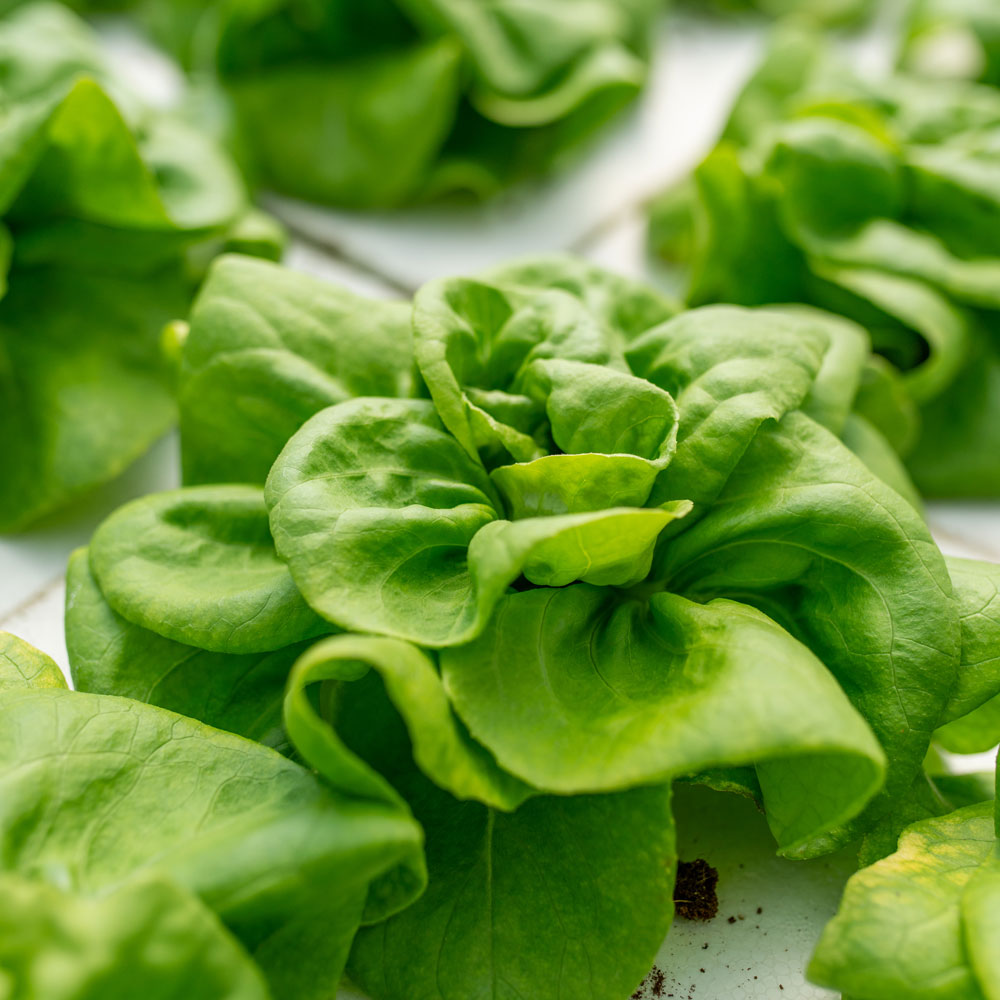
On Wednesdays in Sylva, North Carolina, a modest food hub hums with activity. A packing room is filled with long lines of metal shelves, as volunteers and staff move between cold storage rooms and delivery trucks, assembling orders of fresh, locally grown food.
At the center of that operation is WNC From the Ground Up, an organization working to connect small farmers with new markets while expanding access to fresh food across rural communities.
This kind of hub-based model — bringing farmers, aggregation, logistics and buyers into a single system — is one that Winrock has helped advance, working with partners across the country to strengthen regional food infrastructure and expand market access for producers.
For Executive Director Lisa Kelly, the challenge is clear. Western North Carolina has deep agricultural roots, but infrastructure gaps — including limited internet access and rural isolation — make it difficult for farmers to grow their businesses and for communities to consistently access healthy food. Programs like LFPA have helped bridge that gap.
“Small farmers are not experiments, and neither are hungry people,” Kelly said. “These experimental funds have proven that permanent support will allow our local economy to grow while feeding people in need at the same time.”
Through LFPA support, the food hub has aggregated products from dozens of farms, coordinated distribution and connected supply with demand; functions that are difficult for individual producers to manage on their own. The result increases sales and allows food to move more efficiently within the region, while helping both farmers and communities plan for the future.
Read more about our work with WNC From the Ground Up here.
Creating reliable demand for farmers
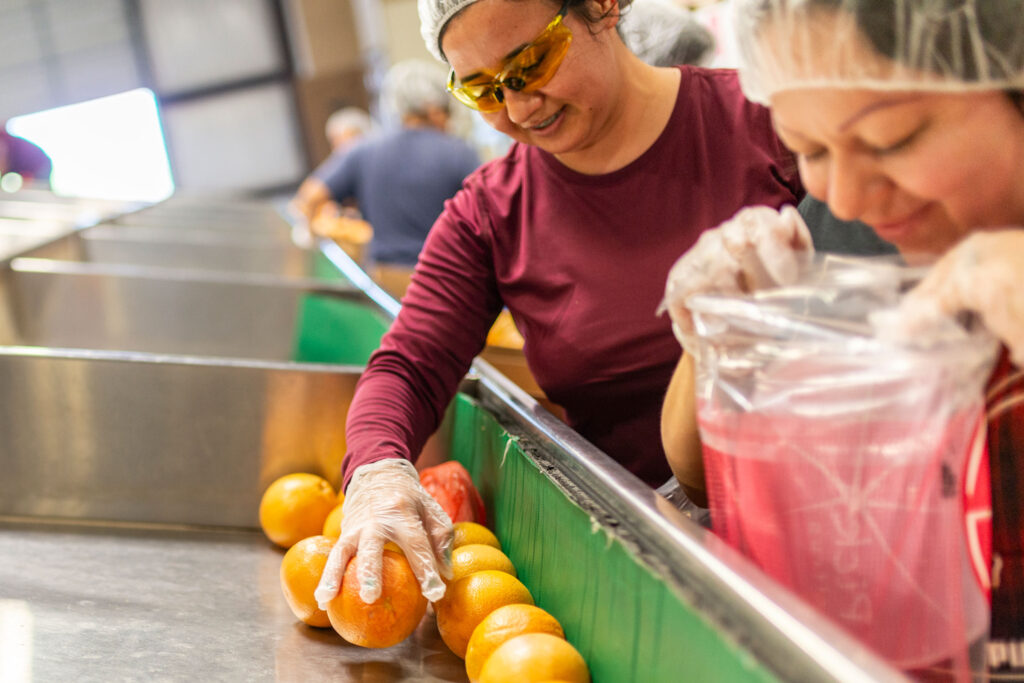
In Texas, a similar model is operating at scale. The Common Market Texas, a regional food hub, connects more than 30 farms to buyers ranging from schools and hospitals to food assistance programs.
Executive Director Jeremy Logan says the approach has lasting impact, in part because the food hub issues “future purchase orders,” that guarantee The Common Market will purchase a specific volume of specific crops at a specific time in the near future. Through LFPA, The Common Market Texas was able to purchase millions of pounds of locally grown food and expand its network of contracted farms.
For most producers, reliability is just as important as volume. The use of forward purchasing and coordinated demand helps give farmers greater certainty. With clearer expectations about what will be bought and when, farmers can better plan, invest and grow.
The contracts enabled farmers to invest in their farms or go to the bank for a business loan. Logan said he has “any number of stories where farmers have been able to buy a tractor, put in a new cooler, hire more labor, purchase or lease more land.” Farmers receive payments on Tuesdays. “We take great pride in our ability to make timely and efficient payments to our producers,” Logan says.
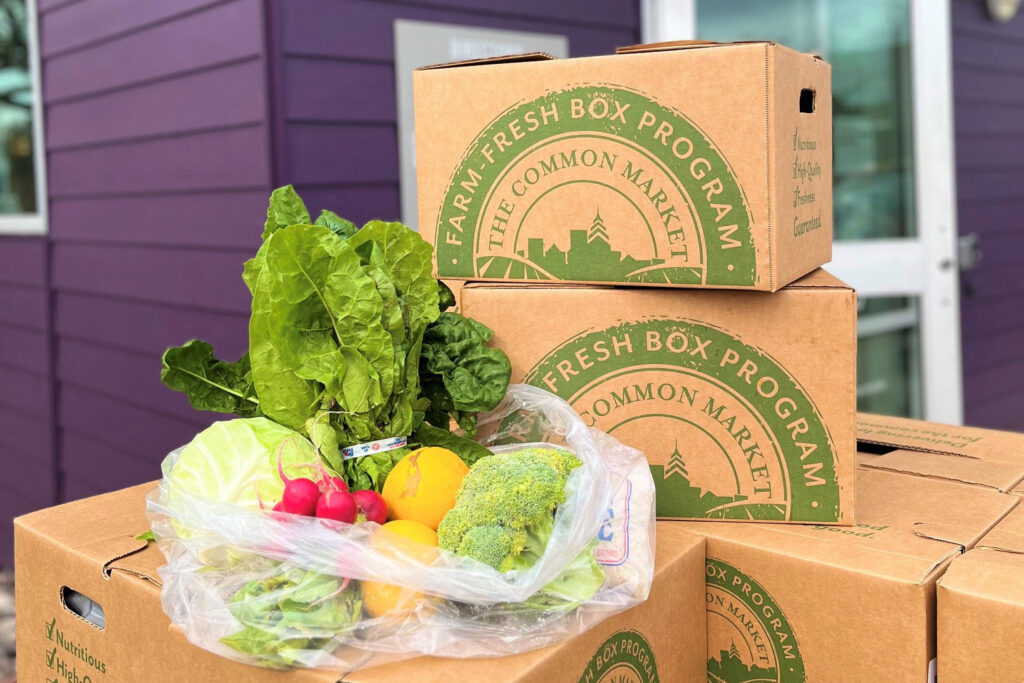
At the same time, food reaches families through Farm-Fresh Boxes designed to deliver high-quality, appealing produce.
“We want the boxes to have nutritional value. We want them to have balance, but we also want them to be very appealing,” Logan said. The result is a system that serves both producers and communities through the same set of relationships.
Read more about our work with The Common Market Texas here.
Keeping value and production in the community
In South Dakota, the model takes a different but equally powerful form.
On the Cheyenne River Sioux Reservation, the Cheyenne River Buffalo Company manages a herd of thousands of buffalo and distributes meat directly to communities across a vast, rural landscape.
“Our history goes hand in hand with the buffalo,” said CEO Jayme Murray, a tribal member and sixth-generation cattle rancher. “They’re part of our creation stories, and they provided everything for us. They were our economy for thousands and thousands of years.”
Through LFPA, the organization expanded that work by purchasing locally produced food and distributing it regularly across the reservation’s 13 communities. “We applied for LFPA to get good food into people’s homes,” Murray said.
The impact has been multifaceted, creating a reliable market for local production, restoring important cultural connections, supporting job creation, and enabling the company to reinvest in its own operations, including plans for a new store.
“We’re turning that money back into our local economy, and that’s very cool,” Murray said.
In this context, resilience is visible in the community’s ability to produce culturally relevant food locally, distribute it locally, and to reinvest in systems that sustain both.
Learn more about work with the Cheyenne River Buffalo Company here.
A model for systems that last
Across these three examples in North Carolina, Texas and South Dakota, the details may differ, but the pattern is consistent.
Local farmers can gain access to more stable markets. Organizations can build the infrastructure needed to aggregate, process and distribute food. Communities can gain more reliable access to fresh, locally sourced products. Together, the elements reinforce one another.
When farmers can plan ahead, they are more likely to invest and grow. When distribution systems are in place, food moves more efficiently and stays closer to home. When communities are connected to both, they are better equipped to navigate economic and supply chain disruptions.
Winrock’s work with partners to support and strengthen these models illustrates what’s possible when those pieces come together. It demonstrates that strengthening local economies and improving food access are outcomes of the same underlying approach: investing in local production, local partnerships and the systems that connect them.
As these examples demonstrate, when those investments take hold, they help communities build systems that can endure, adapt and continue delivering value over time.
Related Projects