Power of place: Winrock support for community-driven development in the Arkansas Delta
This piece is part of the #WinrockResilienceStories series. It explores how Winrock International partners with rural communities, local leaders and others to prepare for change, strengthen the systems they rely on and create new opportunities rooted in resilience. In this installment, Winrock Program Officer Jordyn Schneider examines how Winrock’s U.S. Department of Agriculture-funded ASPIRE project is helping four Arkansas Delta communities turn knowledge, relationships and local priorities into actionable plans for durable economic development.
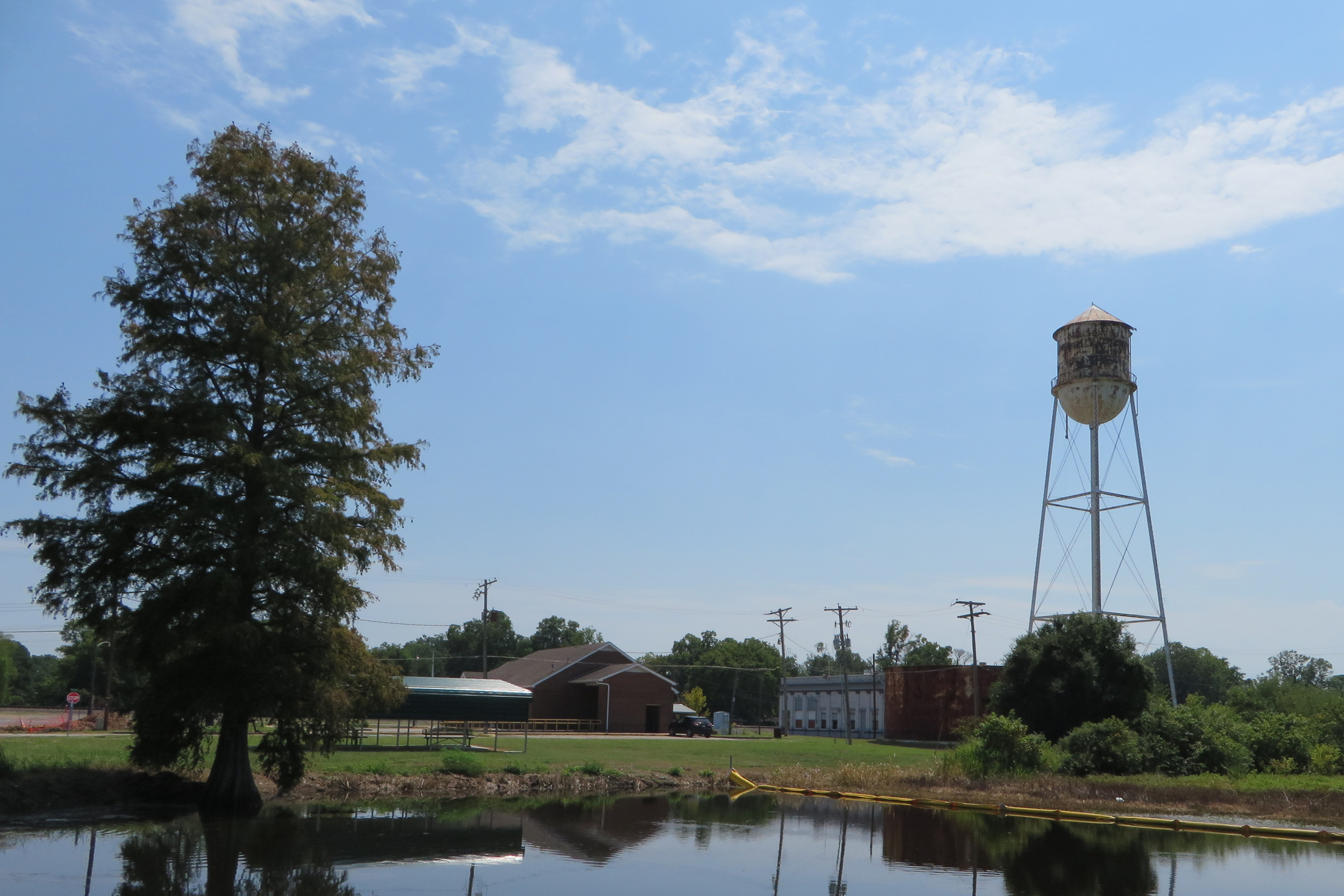
A crow could fly from the town of Altheimer, nearly on the banks of the Arkansas River, to Elaine, flanked by the oxbow lakes of the Mississippi River, in a straight shot of 57 miles across east Arkansas.
Unless catching a ride with a crop duster, human travelers follow U.S. Highway 79 through the towns of Altheimer, Wabbaseka, and Humphrey before choosing to head north or south to find a bridge over the Dale Bumpers White River National Wildlife Refuge to get to Elaine. In late August, this route zigzags through seas of waving golden rice, soybeans being combined, and cotton bolls starting to pop with white. Heat simmers on the horizon before boiling up to form thunderheads in the late afternoon.
Across these four Delta communities, Winrock’s ASPIRE project shows how rural development starts with place: listening to local priorities, activating existing assets, and helping leaders turn community vision into investment-ready plans. Winrock’s asset-based approach to community development combines locally led planning, capacity-building, specialized technical assistance, cross-sector coordination, and seed investment to help rural communities move toward implementation. After nearly three years of intensive training and technical assistance, we wanted to catch up with local leaders to reflect on the progress that ASPIRE – short for Advancing Sustainability and Preparedness in Rural Economies − has catalyzed.
A commitment to rural
Winrock has supported the USDA’s Rural Community Development Initiative since the program was created by Congress in 1999. Through this program, Winrock partners with local governments and nonprofits to develop skills, create opportunities and amplify local assets, helping catalyze transformative community and economic development initiatives. Locally driven, these initiatives help create vibrant rural places where people and communities flourish.
“Rural communities already have the leadership, knowledge and vision to shape their futures,” says Elizabeth Gomez, Winrock’s associate director of U.S. Programs. “Winrock’s role is to work alongside them to strengthen local and organizational capacity, connect the right partners and expertise, and turn community priorities into actionable plans that are ready for investment and implementation. That is how locally led ideas become lasting, transformational change.”
The ASPIRE project is the most recent in a long line of Winrock-managed technical assistance and training programs aimed at supporting rural resilience in Arkansas. Building on Winrock’s U.S. Programs’ legacy of supporting rural leaders and organizations across the Mid-South, ASPIRE offers a model for fostering long-term community and economic development in rural areas.
Elaine
This locally driven approach is especially visible in the Arkansas Delta town of Elaine, where residents are connecting deep agricultural knowledge with new possibilities for food access, entrepreneurship, disaster resiliency and community economic development.
Having navigated several weather-related emergencies over the past few years, Elaine leaders and residents are working to transform the former school vocational education building into an emergency response center. The effort reflects a hard-earned understanding of what resilience requires in a remote Delta community.
“We’ve learned how to communicate and work together as a team during an emergency situation,” said Mayor Lisa Hicks-Gilbert. “We’re a minimum of 30 miles from any sort of help so we have to rely on each other and take care of one another.”
In Elaine, that ethic of taking care of one another extends beyond emergency response. With only a dollar store in town, residents live more than 30 miles from a grocery store with fresh produce. But in one of the most agriculturally productive regions of the country, food knowledge and food sharing remain deeply rooted in community life.
“We’ve grown food on this land before there was ever such a thing as ‘organic,’” Hicks-Gilbert said. “We’ve got dewberries [blackberries], crowder peas [black-eyed peas or purple hull peas], squash, broccoli so good you can smell it in the field, greens all around, fresh fish caught right here. After the sweet potato harvest, we go pick up what’s left in the fields and take it around to everyone.”
Elaine is a food hub.
Rural communities already possess the leadership, knowledge, relationships, and informal systems that make them resilient. Winrock’s approach to community development helps them strengthen and formalize those assets.
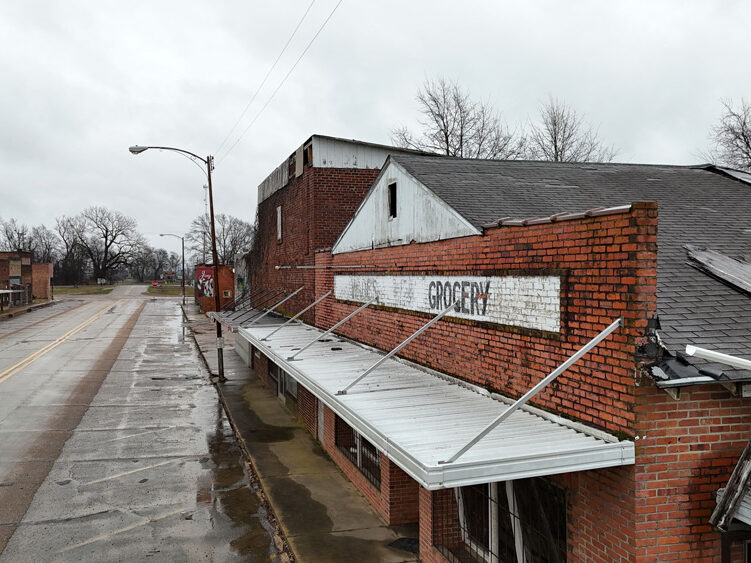
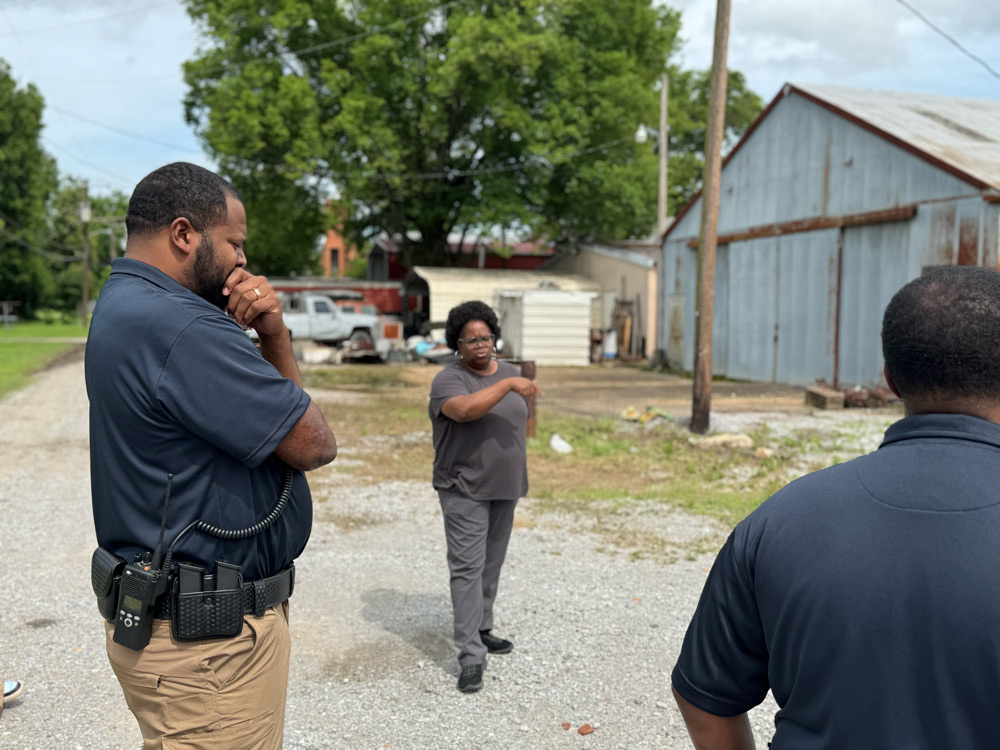
Grocery stores used to be anchor business on downtown Main Streets across rural America. In the heart of one the most agriculturally productive regions of the U.S., Elaine is ironically located in a food desert. Mayor Lisa Hicks-Gilbert describes the challenges many of her residents face and also how they take of each other. Photos courtesy of Kudzu Collective.
The vision for ELAINEfresh is an example of how Winrock helps solidify community ideas into an asset-based development initiative. Envisioned as a local food cooperative with retail space for produce, meats, and prepared foods, ELAINEfresh leverages local assets to address limited food access. The design proposed by Kudzu Collective – a Delta-based architecture firm − features a commercial kitchen to help incubate local food entrepreneurs and outdoor space to facilitate a traditional farmer’s market.
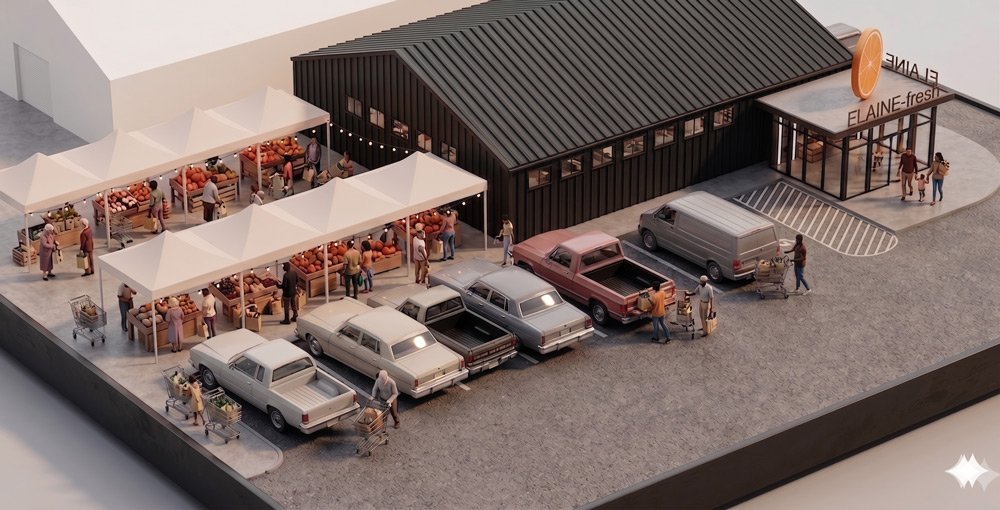
The potential for a local, cooperatively owned food hub in Elaine comes during mounting excitement for the completion of the Delta Heritage Trail. Arkansas State Parks has been connecting this 85-mile rails-to-trails system since 1993 and it’s nearing completion after securing a $20 million grant from the U.S. Department of Transportation and matching donation from the Walton Family Foundation. In 2023, Natural State Initiative Economic Opportunity Zones were created to spur the development of amenities, such as food and retail facilities, in designated zones near state parks. These incentives could help establish ELAINEfresh.
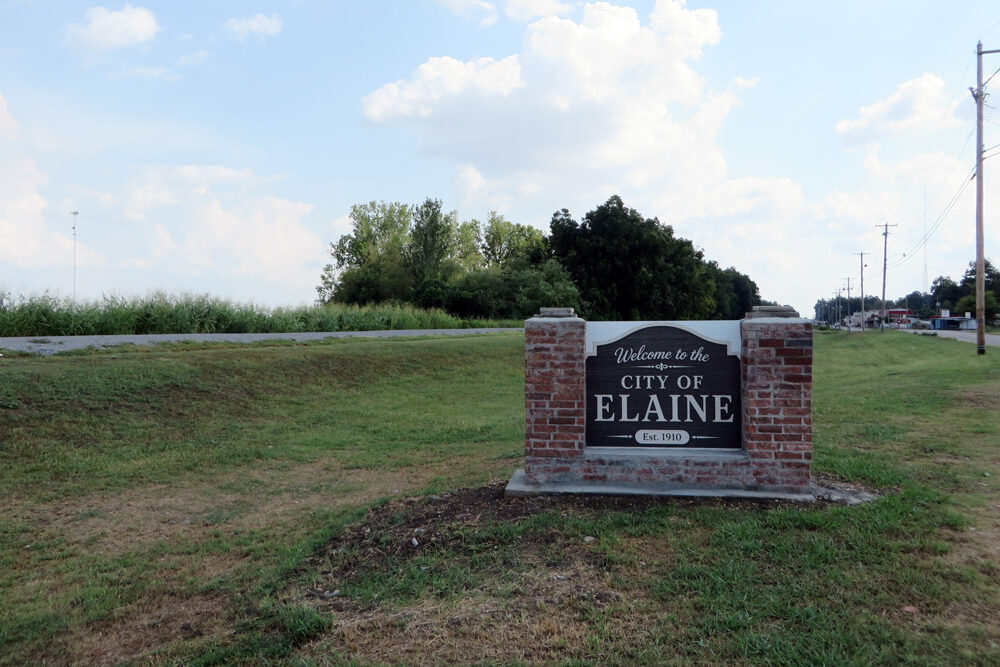
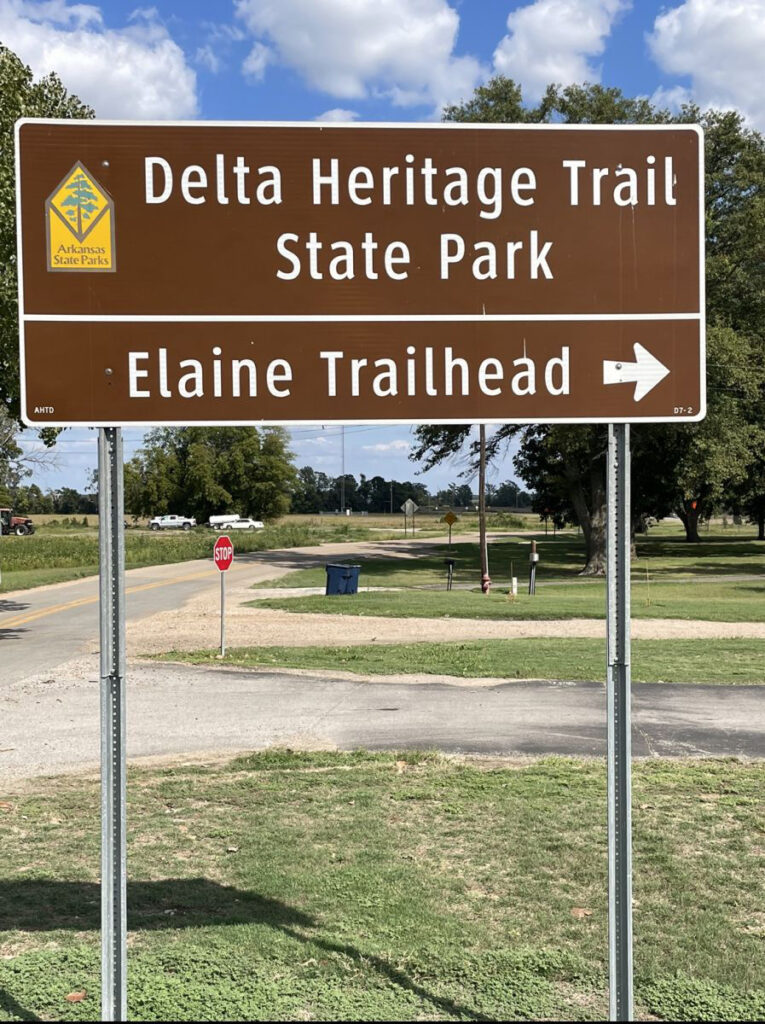
Funded through an ASPIRE Innovation Seed Grant, Elaine’s newly constructed entryway signage welcomes outdoor tourists, cycling enthusiasts, and residents along the Delta Heritage Trail. More than beautification, this signage is part of Elaine’s larger goal to increase visibility and promote community vitality. Photos by Jordyn Schneider.
In August 2026, Elaine hosted a dedication ceremony for the opening of their trail head, located at the intersection of State Highway 44 and Main Street (State Highway 20). The potential site for ELAINEfresh is just a few blocks down. It’s easy to imagine someone turning their bike off the gravel and stopping in at ELAINEfresh. If the season’s right, they might luck out with some dewberry cobbler.
Altheimer
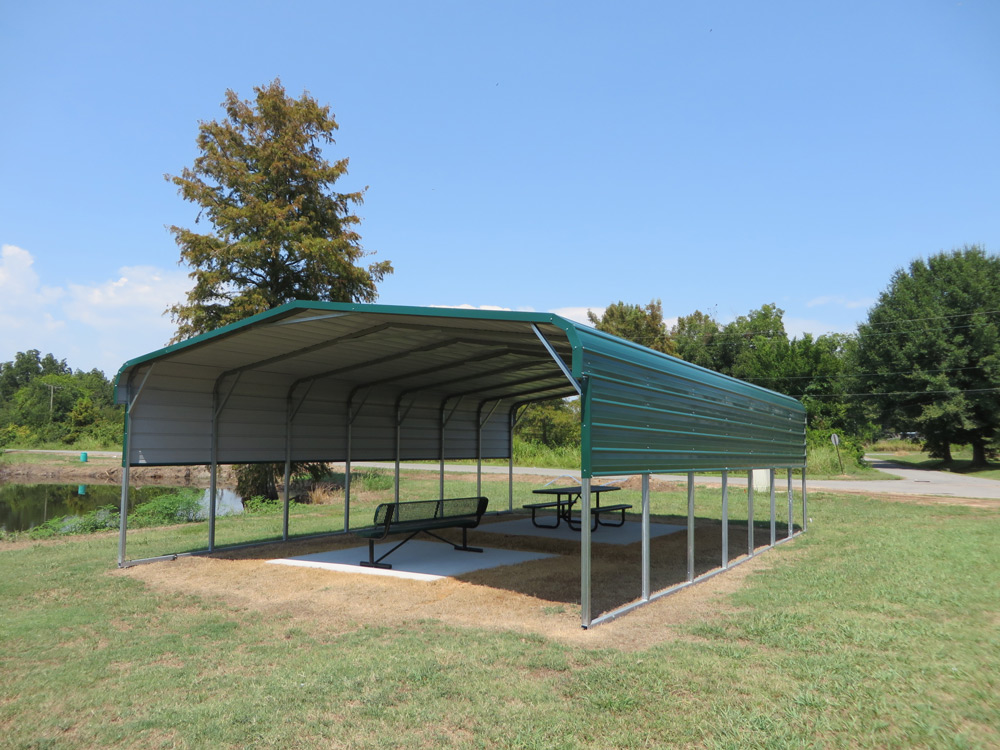
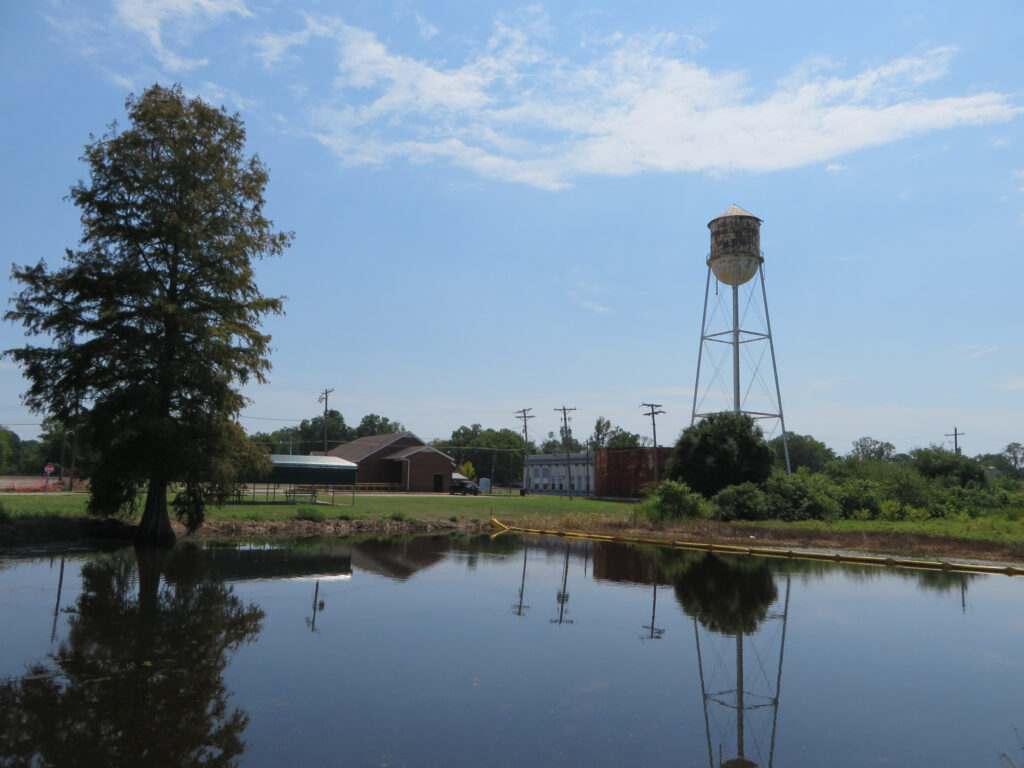
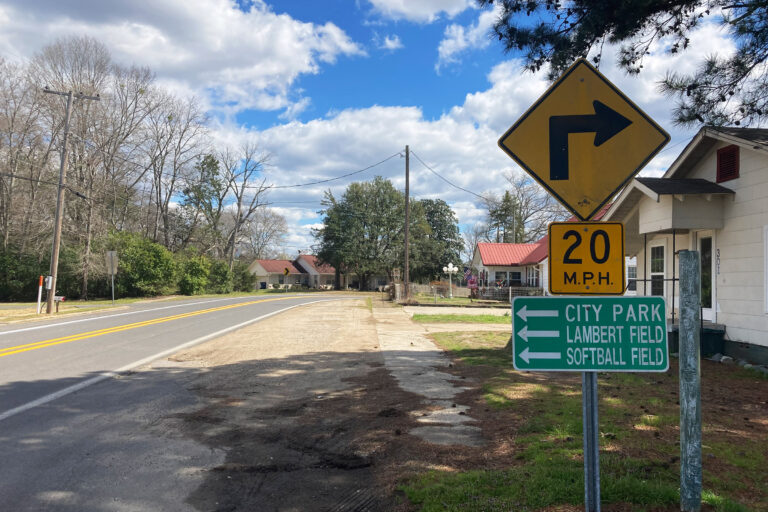
Newly installed welcome signage at city gateways and seating next to a favorite community fishing spot on Flat Bayou in Altheimer, Arkansas. Innovation Seed Grants support asset-based development projects that contribute to a larger community goal, such as improving local retail capture. Photos by Jordyn Schneider
“When my parents moved here in the 1950s, they fished out of that bayou for a living,” Mayor Zola Hudson of Altheimer recalls.
In the spring of 2026, the City of Altheimer used an ASPIRE Innovation Seed Grant to install a park bench and picnic table right next to Flat Bayou, still a favorite fishing spot in the community over 75 years after the mayor’s parents settled in the area. The Altheimer Community Development Commission quickly added to the seed investment by building a shade covering in time for summer.
“Even the ducks and the geese know how to find a cool spot,” Hudson said. “They think this is their home now!” Build it, and they will come, as the saying goes.
More than a starting investment, Innovation Seed Grants are a core strategy in Winrock’s community capacity building approach. Winrock designed the Innovation Seed Grant process as an experiential learning opportunity so that leaders could practice their skills in project design, grant writing, budget development, grant management and reporting. Winrock coached leaders to utilize this small investment in working toward accomplishing a larger community vision.
Why a park bench and a picnic table?
Every day, hundreds of commuters speed past Altheimer’s city center on the U.S. Highway 79 bypass. With sales tax being the primary source of revenue for towns in Arkansas, this represents thousands of dollars of worth of retail leakage and uncaptured sales tax revenue for Altheimer. However, with a population of roughly 650, retailers and local entrepreneurs would be hesitant to start a business in Altheimer.
Understanding the complex dynamics of rural economies, Winrock partnered with the University of Arkansas Division of Agriculture Extension and Arkansas Economic Development Institute to conduct retail market assessments for ASPIRE communities. Data from Altheimer’s assessment show that there is substantial retail demand in the area, but that only 19% of expected retail demand is captured locally in Altheimer.
Altheimer leaders used the seed grant to advance their goal of bringing more traffic (potential retail dollars) into Altheimer by placing welcome signs at key highway entry points and improving seating options at the local park on North Main Street beside Flat Bayou.
More than simply placemaking or beautification, the project contributes to a larger economic development strategy.
In addition to Innovation Seed Grants and retail market assessments, Winrock included architectural design services for potential community facilities as part of ASPIRE’s comprehensive capacity building approach. Understanding the gap that exists between ideation and implementation for capital improvement projects, Winrock again partnered with Kudzu Collective to develop community facility designs. Through a participatory design process, Kudzu and Winrock supported leaders in identifying local architectural assets, prioritizing community needs, and envisioning a design solution to advance larger community goals.
For Altheimer, the ONEgeneration Community Center leverages the town’s unused senior center to address the need for multi-generational community support. Envisioned as a multi-use hub, the design proposes flexible space for community gatherings, after-school and summer youth programs, and wellness events. A shared culinary space includes a commercial-grade teaching kitchen and food pantry, as well as an onsite community garden, greenhouse, and outdoor dining area.
“People are going to be excited about this! This plan really shows us what the space can actually be; it’s more than just an idea,” Mayor Hudson said.
ASPIRE helped move the community from concept to a tangible project with a community-informed design, defined uses, preliminary costs, and a clearer pathway for pursuing funding.
An asset-based approach to development starts by identifying resources that are already available and ready to be activated. The ONEgeneration Community Center leverages Altheimer’s existing architectural and social capital to address community needs.
Winrock is currently working with Altheimer on pursuing a phased renovation strategy that leverages local investment and in-kind support to position the city for larger funding opportunities.
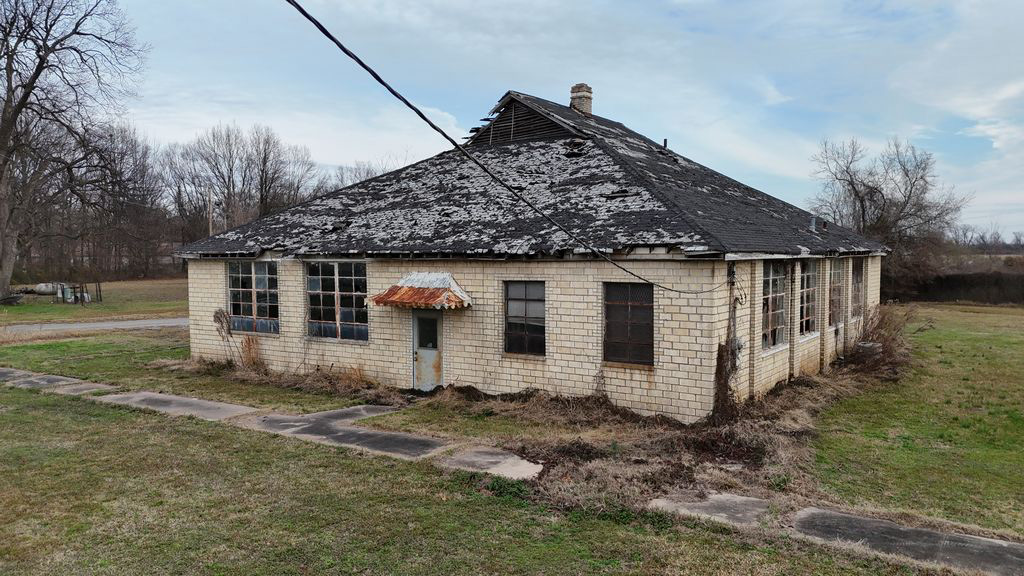
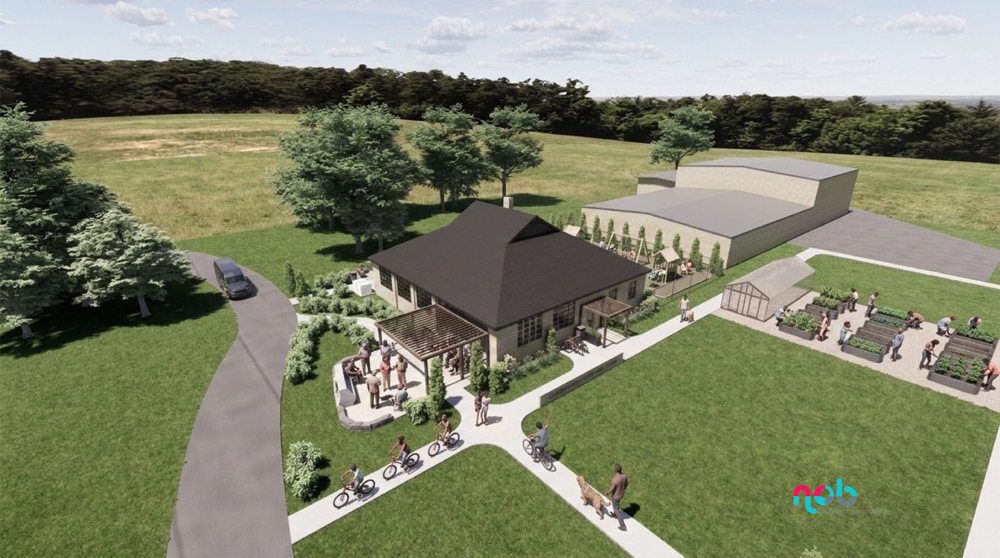
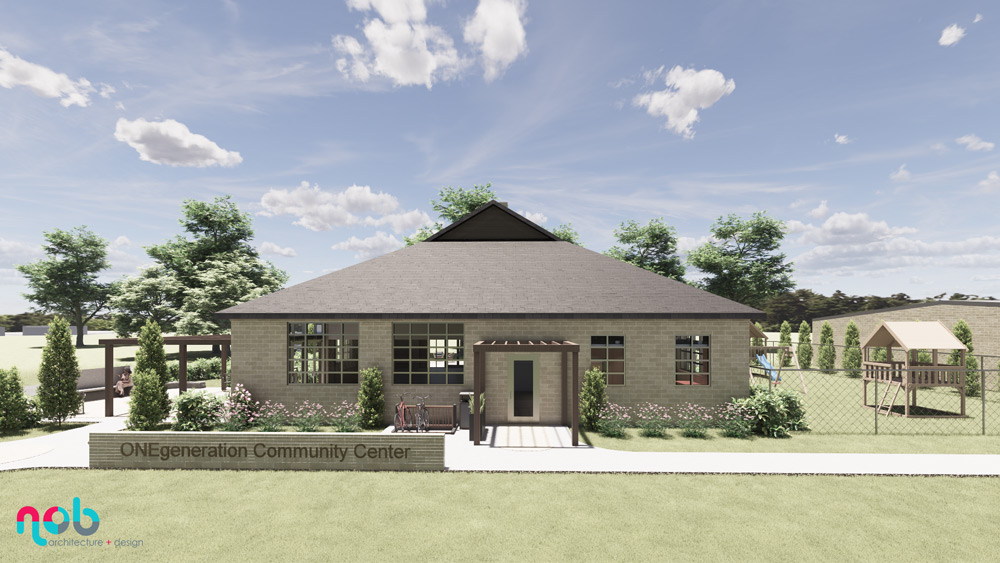
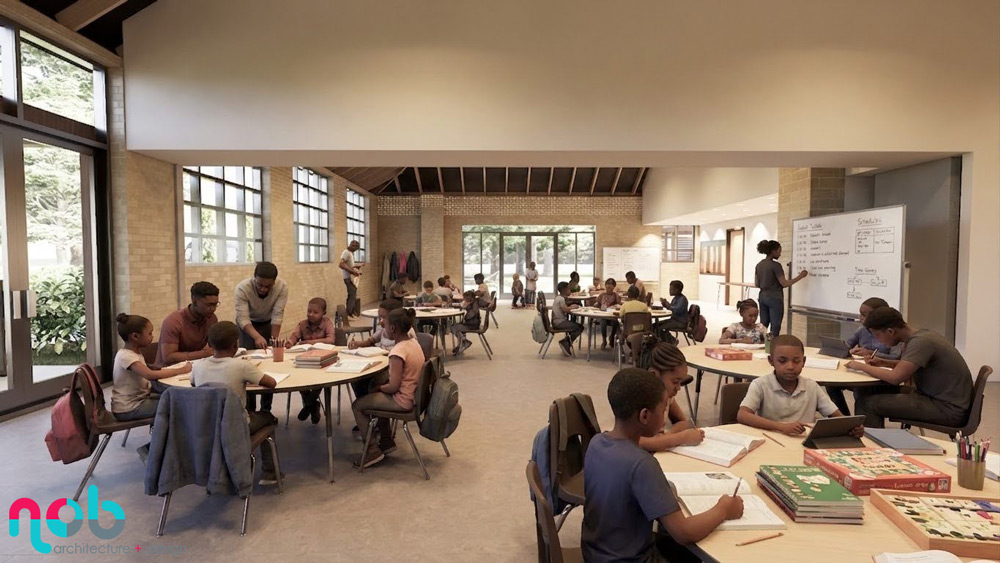
The Altheimer ONEgeneration Community Center will transform an abandoned structure into a vibrant community hub. Altheimer leaders are currently working on a funding strategy to bring the nearly $1.5M project to life. Renderings courtesy of Kudzu Collective.
Wabbaseka
Altheimer’s vision centers on gathering space and intergenerational connection. Just down the highway, Wabbaseka’s priorities point to another dimension of rural resilience: preparing before disaster strikes.
As part of their community facility design process, Winrock supported Wabbaseka in bringing together elected leaders, city staff, and residents to assess local needs and assets. The resulting solution reimagined the use of City Hall to serve as a local emergency operations center when needed.
Kudzu Collective proposed light renovations to the existing city hall to enhance its functionality and allow for easy conversion to an emergency response center. The design includes modular personnel units for storage and convertible bed units, either for first responders or by residents impacted by the disaster. Through collaboration with the International Medical Corps, another ASPIRE partner, Kudzu incorporated additional features to ensure the building could be functional during a disaster such as a hardened safe room, emergency generator and electrical upgrades, and potable water tanks.
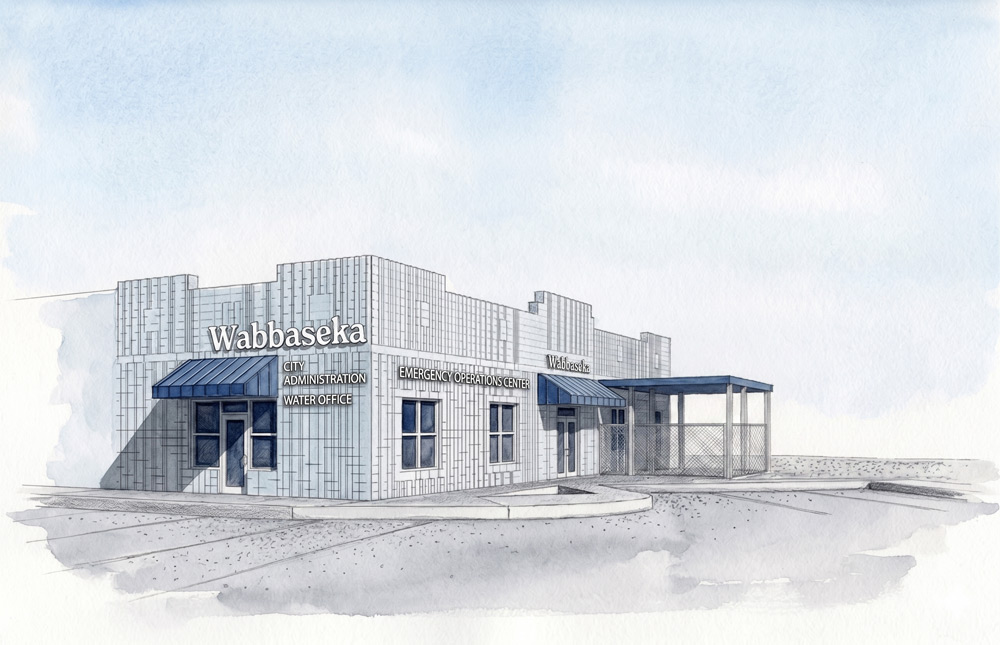
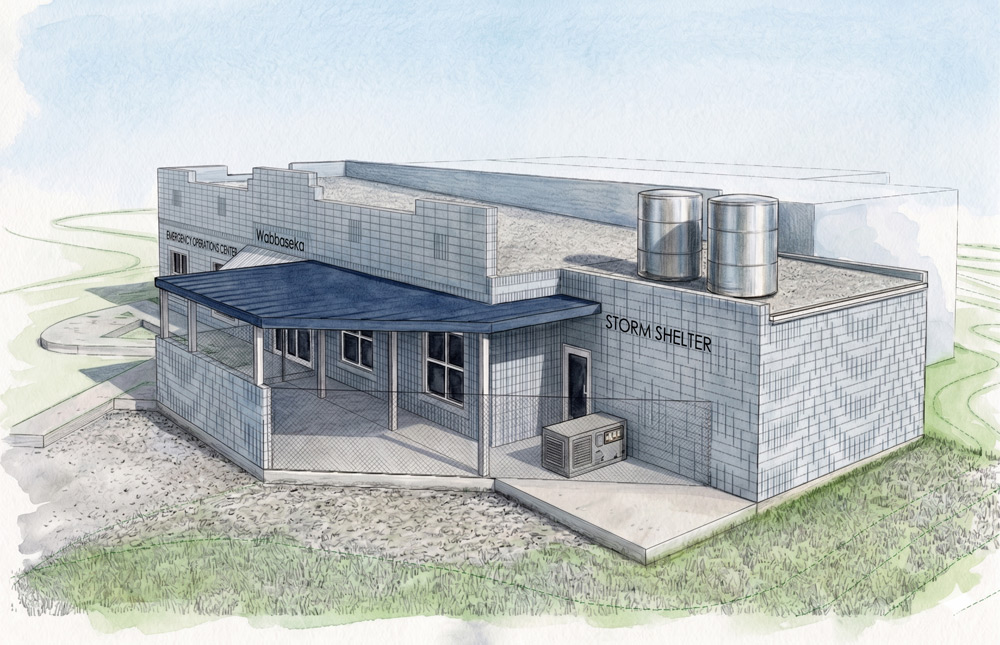
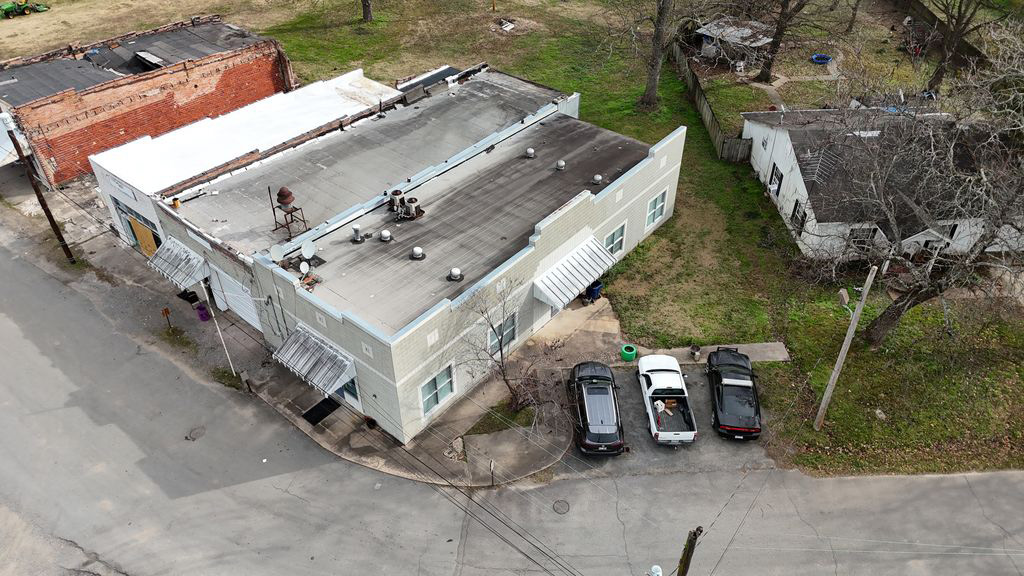
With light renovations and additions costing less than $600,000, Wabbaseka’s City Hall can be transformed into a multi-purpose facility for daily city administration and emergency operations. Renderings courtesy of Kudzu Collective.
Winrock designed ASPIRE to facilitate cross-sector collaboration like this. Community needs are not neatly siloed, so effective technical assistance shouldn’t be siloed, either. By assembling a cross-sector team of experts, Winrock created a collaborative environment where communities could address multiple needs comprehensively rather than treating them as separate activities.
“I’ve lived in Wabbaseka for a long time, and I don’t remember a program [like ASPIRE] that has helped us like this before,” Mayor Andrew Goodloe said.
Winrock and Wabbaseka leaders discussed ways to involve the community in bringing this vision to life, like sending the prototype for the modular personnel units to local high school students or craftsmen to try to construct. Community engagement strategies like this build local ownership, reveal creative sources of in-kind support, and expand opportunities for leadership development.
Community engagement is a powerful community development skillset that is often overlooked as a box to check on a grant application. Knowing that this skillset is foundational to sustaining long-term development, Winrock partnered with Narrative12, a Delta-based communications firm, to train ASPIRE leaders on key topics such as inclusive community engagement, crisis communication, media engagement, critical conversations and digital communications.
“It’s important to get the word out so that people know what’s going on in the community and how they can participate,” said Recorder-Treasurer Jennifer Moore. “Like this project [ASPIRE], this is important training that everyone can benefit from.”
Humphrey
The need for emergency preparedness and communications becomes even clearer just five miles farther down U.S. Highway 79, where the city of Humphrey is still recovering from a severe 2023 storm that destroyed city hall and damaged buildings throughout town. Humphrey was just one of many towns across Arkansas that were significantly impacted by weather events in 2023. By June of that year, towns across the state had been hit by flash floods, ice storms, tornados, large hail, and straight-line winds. Nationally, 2023 was a record-breaking year with $93 billion in weather-related disasters, including the devasting wildfires in Hawaii and massive flooding and mudslides in California.
Communities across the Delta and descendants of displaced survivors around the country still remember the devastation of the Great Mississippi River Flood of 1927, now nearing its 100th anniversary. For Delta communities like Humphrey, localized flooding and flash floods remain a near constant threat.
Against this backdrop, Winrock designed ASPIRE to build rural leaders’ capacity to prepare for, respond to, recover from and mitigate the impacts of climate-related natural disasters. Winrock again partnered with International Medical Corps to provide an interactive hazard vulnerability assessment workshop and essentials of business continuity training to ASPIRE communities. During these events, community members described how their emergency preparedness and response plans were typically developed reactively rather than proactively and that systems and protocols were largely undocumented. To strengthen and help formalize local efforts, IMC developed emergency operation plans tailored to each community’s local context.
After the 2023 storm destroyed the Humphrey City Hall, the city administration relocated to the community center, turning a temporary solution into an opportunity to rethink how the building could serve the community long term. Through ASPIRE, Humphrey leaders worked with project partner, Kudzu Collective, to reimagine a rebuilt “Humphrey CommUNITY Hall” as a multi-use civic hub. Light renovations would improve the building’s functionality for city administrative staff, city council, district court, law enforcement and the public. A large multipurpose room with a commercial kitchen would restore the building’s original role as a community event center, while new dedicated spaces would support meetings, emergency operations and polling when needed.
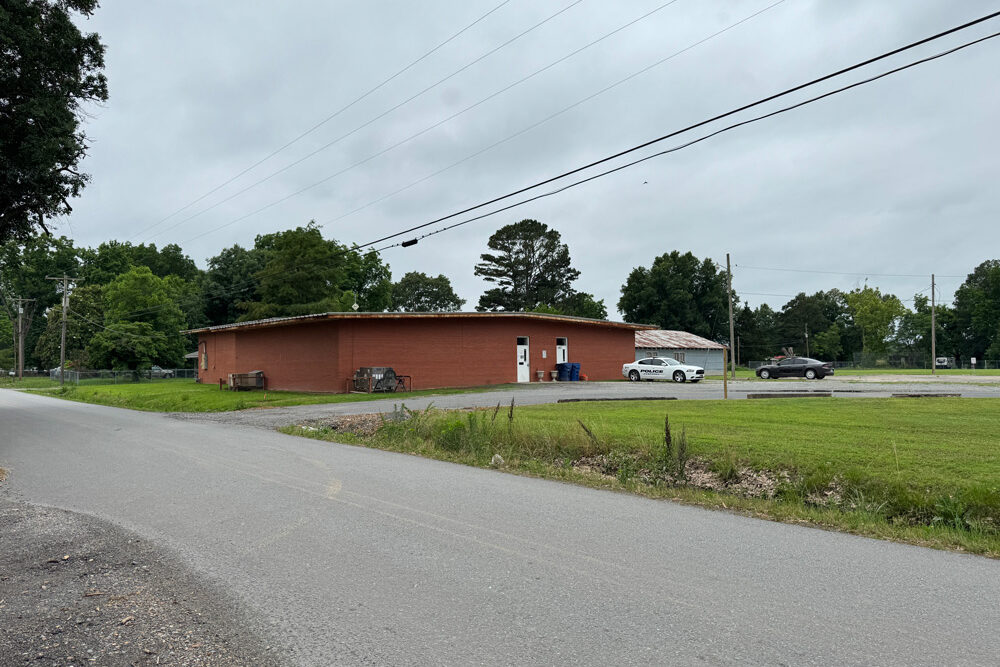
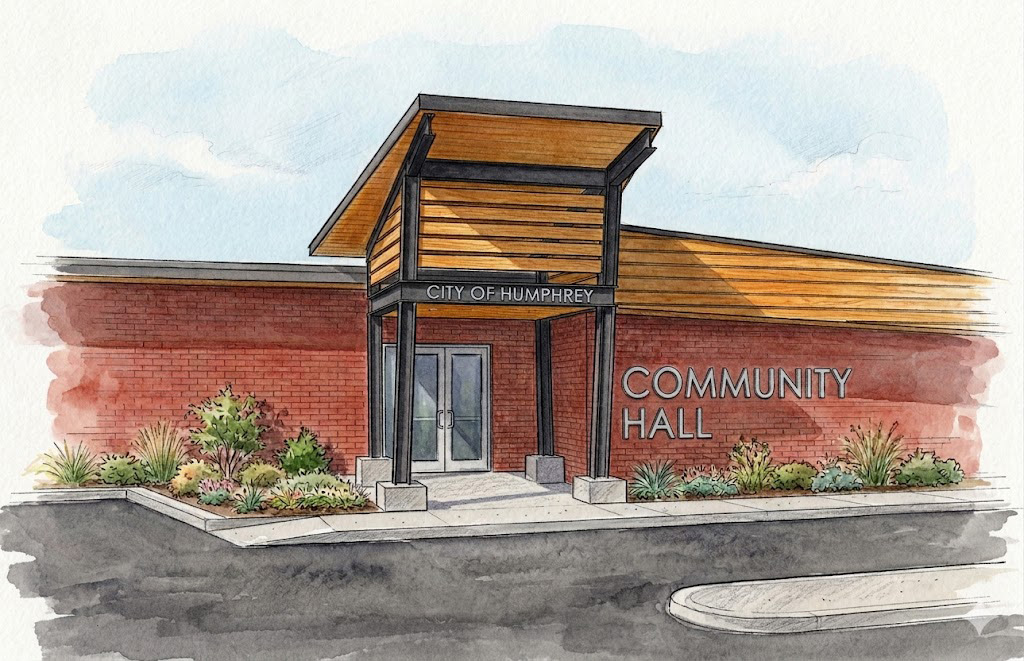
Destroyed in a 2023 storm, Humphrey City Hall was relocated from downtown to the town’s community center. City Councilman Chris Potter points out the City Hall foundation and other damage to downtown. A testament to the town’s resilience, Humphrey’s vision for the CommUNITY Hall brings new functionality to community. Renderings courtesy of Kudzu Collective.
Maintaining momentum
Leaders in the cities of Altheimer, Wabbaseka, Humphrey and Elaine, Arkansas have worked closely with Winrock and partners through ASPIRE for nearly three years. With the project set to formally close in September 2026, Winrock has ensured that capacity remains in each community to sustain momentum, and that projects are primed for follow-on investment.
Communities are not only equipped with community facility designs, emergency operation plans, and retail market assessments, they are ready to bring these plans to life.
We’re excited to see how ASPIRE leaders carry this momentum forward.
Jordyn Schneider works with Winrock’s U.S. Programs team to support rural community and economic development in Arkansas. Her work focuses on locally led planning, capacity building and helping communities move ideas toward investment and implementation. She helps lead the team’s program design and evaluation efforts, merging innovative and evidence-based practices in a community-driven approach. Jordyn is a graduate of Truman State University and holds a master’s in public health, with a focus on rural and global health, from the University of Arkansas for Medical Sciences Fay W. Boozman College of Public Health.
Related Projects