How Winrock’s Wallace Center is helping dairy farmers in rural U.S. communities boost profits and protect ecosystems
Dairy farmers across the U.S. Midwest and Northeast are proving that profitability and environmental stewardship don’t have to be trade offs.
This story kicks off a new series, #WinrockResilienceStories, aimed at sharing innovative Winrock approaches, partnerships and solutions that strengthen rural resilience, improve environmental outcomes, and enable communities and the ecosystems they rely on to flourish.
We’re starting by spotlighting work by the Wallace Center at Winrock International that illustrates how low‑overhead dairy grazing practices helps U.S. farms boost profits, reduce damaging nutrient runoff and build long‑term resilience. The farms and farmers featured here offer a clear message: when producers are supported with the right tools, partnerships and data, agriculture and livestock production can be both profitable and regenerative.
Across the U.S. Upper Midwest and Northeast, dairy farmers’ livelihoods are under intense pressure from factors ranging from volatile milk prices to rising input costs and growing environmental challenges tied to nutrient runoff, soil and water quality, among others.
A set of new grazing dairy farm profiles from the Wallace Center at Winrock International shows that a different path is not only possible, but already working.
The four recently published profiles, featuring farms in Indiana, Michigan and New York, highlight how low‑overhead dairy grazing can improve farm profitability while delivering measurable environmental benefits. Together, the profiles offer a powerful example of how agriculture‑centered solutions build resilience in rural communities and protect natural ecosystems at the same time — a core priority of Winrock’s 2026–2028 strategic plan and organization‑wide theory of change. (Read Winrock CEO Maqsoda Maqsodi’s letter about Winrock’s 2026-28 strategic plan here.)
Profitability that supports both farms and rural communities
Financial analysis conducted by the Wallace Center shows that the grazing farms featured in the profiles were, on average, 93% more profitable per unit of milk sold than the regional industry average, based on data from FINBIN and Cornell University benchmarks. (FINBIN is one of the largest publicly accessible databases of farm financial benchmarks in the U.S., maintained by the University of Minnesota. Both benchmarks are widely used farm‑level financial comparison tools that allow producers to evaluate performance against regional peers.)
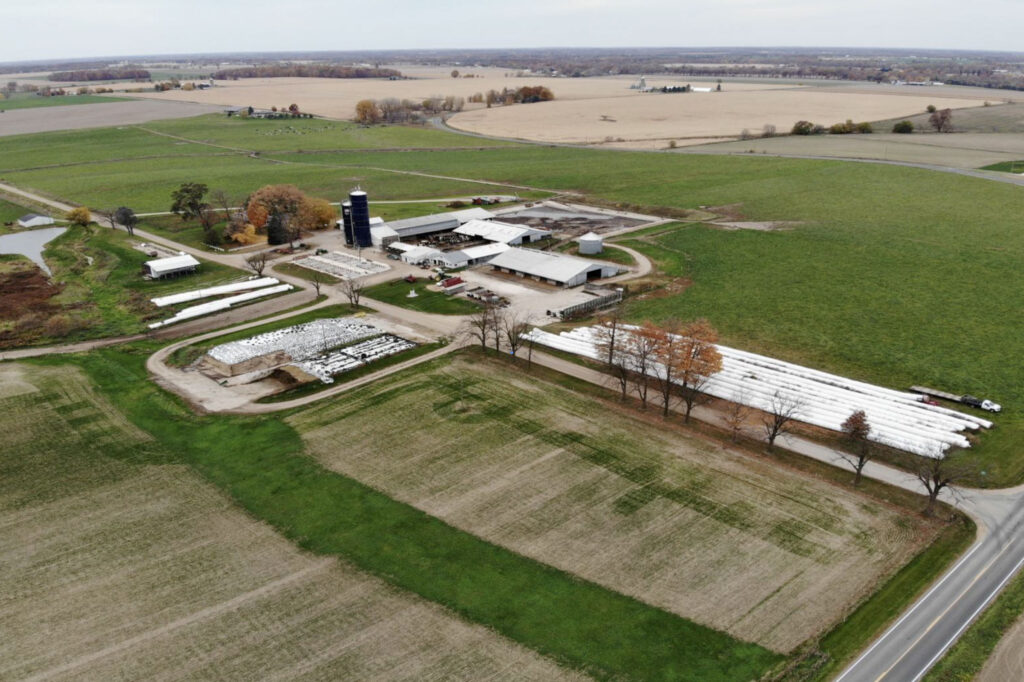
By reducing feed, fuel and infrastructure costs and relying more heavily on managed pasture, these farms can remain viable without scaling up to unsustainable herd sizes.
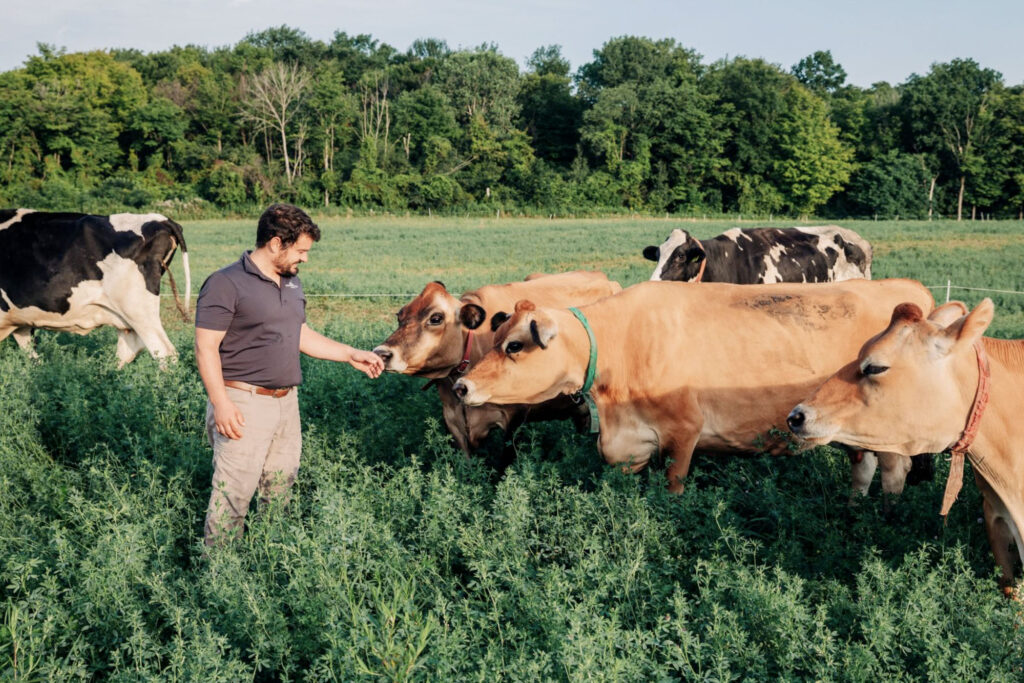
“Using grazing on my dairy operation has allowed my profits to stay positive when other dairies my size have had to either get bigger or sacrifice their margins. It’s allowed us to keep the farm going without losing what makes it work.” — Tom Cook, of Cook Dairy Farm, Pewamo, MI
For Brooks Edge Farm in New York’s north country — a farm currently transitioning from confinement to grazing — Wallace Center’s analysis projects a dramatic turnaround, from a net loss of –$2.37 per hundredweight of milk to +$2.56. (A hundredweight is a standard 100‑pound unit used in the dairy industry to measure milk production and profitability.)
Environmental gains that extend beyond the farm gate
The benefits of low‑overhead grazing extend well beyond the balance sheet. By keeping land in permanent pasture and minimizing tillage and synthetic inputs, the farms profiled are estimated to reduce phosphorus loss by an average of 62% compared to conventional confinement dairies on the same land footprint — an important outcome in regions where nutrient runoff threatens rivers, lakes and downstream communities. When excess nutrients enter waterways, they can trigger harmful algae blooms that degrade water quality, threaten aquatic ecosystems, and disrupt drinking water supplies and recreation for downstream communities.
The findings are drawn directly from the Wallace Center’s financial and environmental analysis accompanying the farm profiles, which assess whole‑farm impacts on soil, water and nutrient retention.
While some grazing operations may have slightly higher greenhouse gas emissions per unit of milk, several of the featured farms show lower emissions per acre and lower total farm emissions than typical confinement operations, underscoring the importance of evaluating climate impacts at the farm and landscape scale.
“The biggest impact from our plan will be milking more cows and needing less labor. Grazing will help us reduce disruption to the soil that row crop production brings. Being so close to Seneca Lake makes reducing nutrient and soil loss really important.” — Lorin Hostetler, of Brooks Edge Farm in Rock Stream, NY
Partnerships that make innovation possible
The grazing dairy profiles were made possible through investment from the Great Lakes Protection Fund and the Northeast Dairy Business Innovation Center, and through partnerships with organizations including the Dairy Grazing Alliance and the Food Finance Institute at the Universities of Wisconsin. Alongside Winrock’s Wallace Center, these partners are providing farmers with customized technical assistance, financial planning and peer learning opportunities to support transitions to low‑overhead grazing systems.
The Wallace Center’s work on low-overhead dairy grazing, part of a multi-year project supported by the Great Lakes Protection Fund and the Michigan Department of Agriculture and Rural Development, reflects Winrock’s broader strategy of pairing locally led innovation with rigorous analysis and systems‑level change to help rural communities adapt, thrive and steward natural resources for the long term.
Learn more about the work of Wallace Center at Winrock International at WallaceCenter.Winrock.org.
Related Projects