New EPA investment expands farmer‑led solutions for cleaner water – from Indiana to the Gulf
LITTLE ROCK, Ark. — The Wallace Center at Winrock International is excited to announce the award of a $2 million grant from the U.S. Environmental Protection Agency’s Gulf of America Division. This investment will allow the Wallace Center and partners to significantly expand the grazing transition model in southern Indiana, scaling existing support services from one county to a four-county region. The project will resource farmers with financial and technical assistance that enable them to implement practices that reduce erosion and sedimentation in Indiana’s Blue-Sinking Watershed.
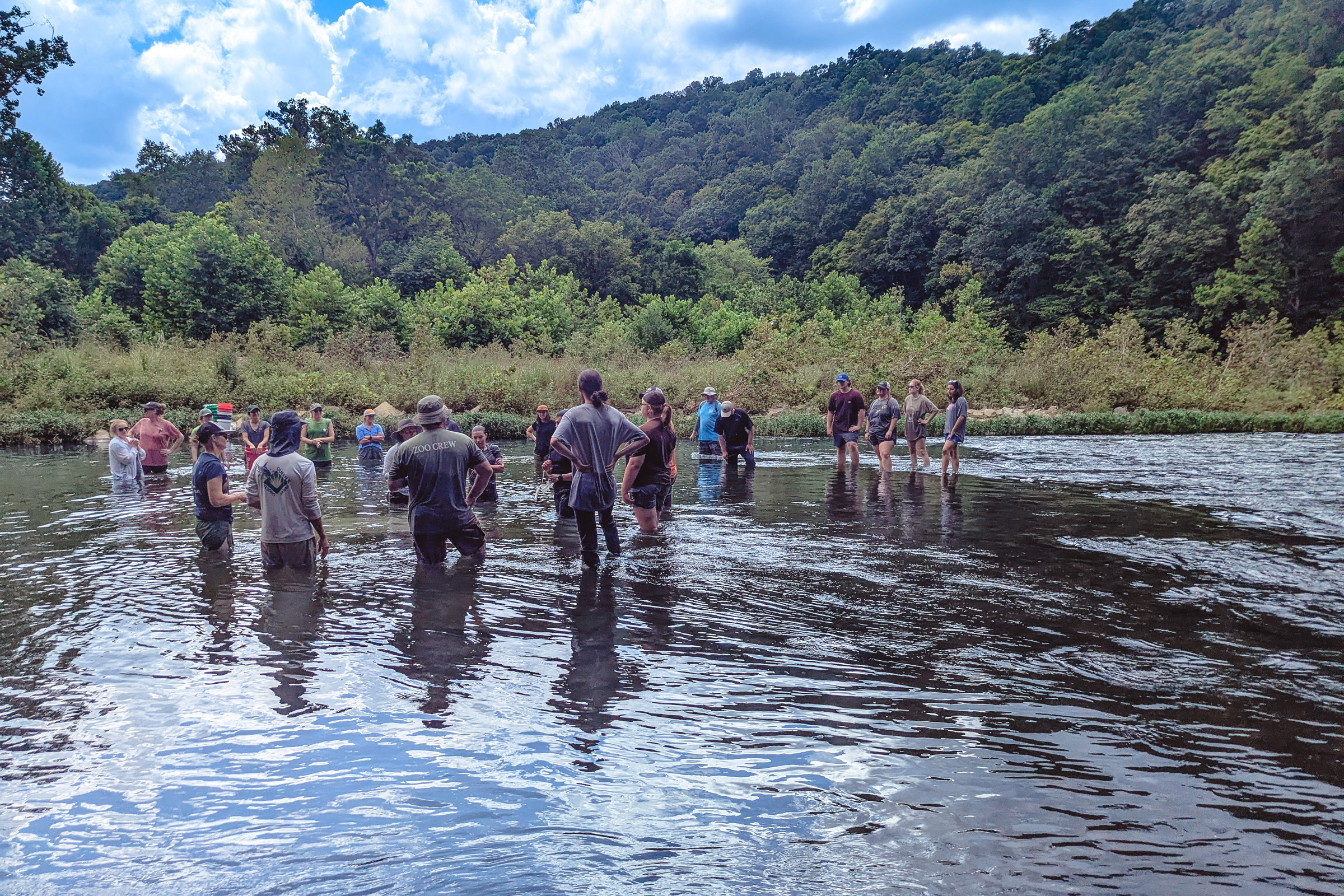
The Blue‑Sinking Watershed is a large watershed in southern Indiana (and extending into northern Kentucky) that drains into the Ohio River. In Indiana, it covers roughly 800,000 acres, and includes the Blue River, the Little Blue River, Sinking Creek and numerous smaller streams and tributaries. Water flowing through this system ultimately reaches the Ohio River, then the Mississippi River, and eventually the Gulf of America.
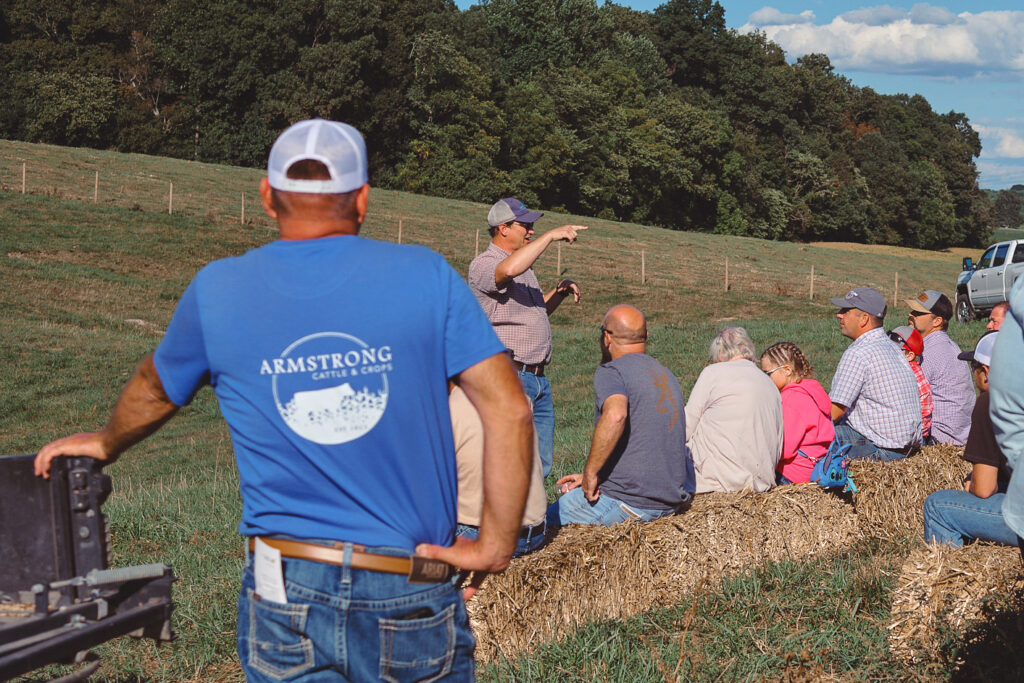
The new EPA-funded project aligns with Winrock International’s new strategic plan, which emphasizes scaling regenerative agriculture and water-quality solutions that strengthen rural economies while protecting natural resources. With this funding, the Washington County Soil & Water Conservation District will work closely with Wallace Center to provide direct financial and technical support to farmers to improve and expand grazing practices, reducing nutrient runoff and enhancing water quality across the region. The expanded program will include cost-share opportunities, one-on-one technical assistance, and farmer-to-farmer field days.
“Soil and Water Conservation Districts have been the bedrock of locally led conservation efforts since the Dust Bowl,” said Liz Rice, executive director of the Indiana Association of Soil and Water Conservation Districts. “In all that time, their commitment to serving landowners and users in their communities has not wavered. Partnerships like this, which deliver advanced technology and on-farm assistance to graziers in this critical watershed, will have a deep and lasting positive impact on southern Indiana economies and ecosystems for years to come.”
A central component of the project is a collaboration between Purdue University and the University of Wisconsin-Madison. Working with Wallace Center staff, these partners will adapt UW–Madison’s grazing decision support tool, called Grazescape, for use in southern Indiana. The tool – designed to evaluate the environmental and economic outcomes of a potential change in grazing management practices – will be customized to reflect the region’s soils and climate. Once adapted, it will become a key resource to help producers in southern Indiana assess the environmental benefits of expanding or improving managed grazing operations.
Aaron Walker, board chair of WCSWCD and a sheep producer, emphasized the importance of EPA’s investment in custom financial and technical assistance for southern Indiana’s livestock community: “Farmers in southern Indiana have achieved good results using conservation practices to address issues like soil erosion and nutrient loss. Livestock producers who want to transition to regenerative grazing or increase their use of regenerative practices are improving the resilience of their soil and water resources, but have high initial costs and many fewer opportunities for financial and technical assistance. When you have to choose between repairing external pasture fencing or converting those same acres to corn or beans, having the right financial and technical support can make a big difference in your decision-making process.”
About the Wallace Center at Winrock International: The Wallace Center brings together diverse people and ideas to co-create solutions that build healthy farms, equitable economies, and resilient food systems. Through our programs and leadership, we seek to affect systems change to bring benefits to the environment, to communities, and to the farmers and food businesses that are the building blocks of a healthy and equitable food system.
Related Projects