Resilience in action: Meet the trafficking survivors turning recovery into prevention in Bangladesh
This is the second in our 2026 series, #WinrockResilienceStories, aimed at amplifying community voices and sharing the collaborative approaches, partnerships and solutions that strengthen rural resilience, improve environmental outcomes, and support both people and planet to flourish.
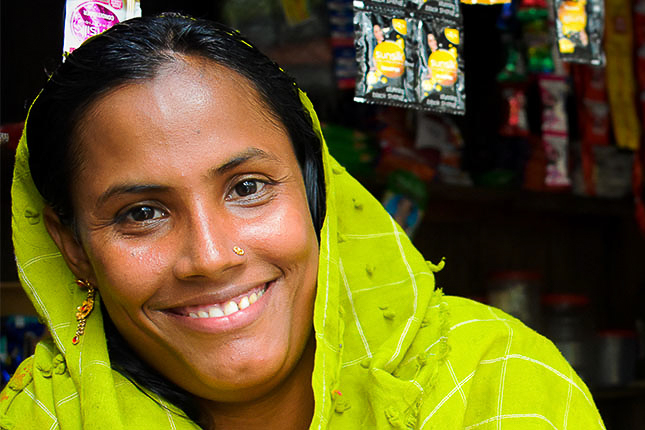
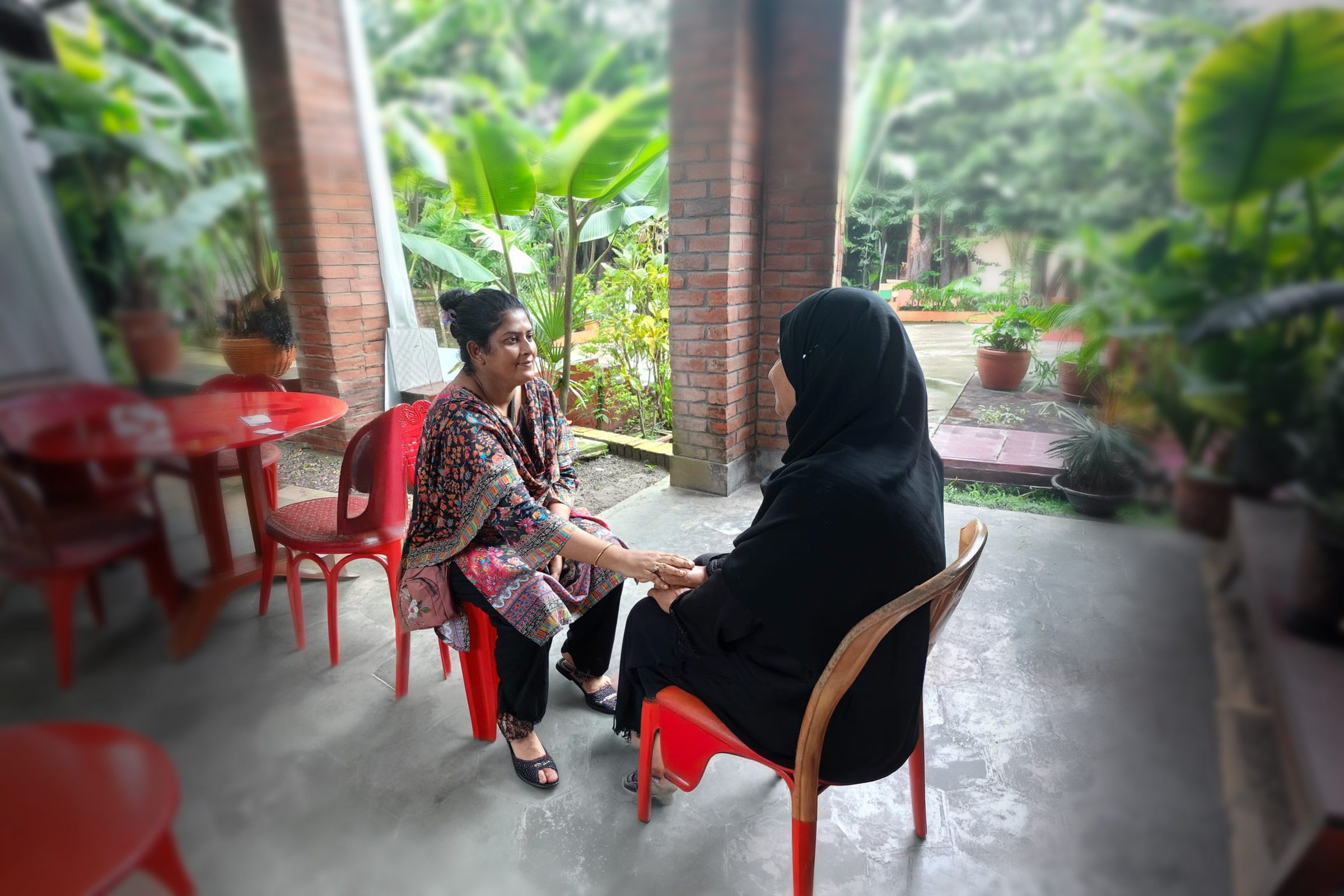
Editor’s note: the four survivors spotlighted in this story have each authorized use of their names, images and quotes. Photo credits: Ashshash II project.
Across Bangladesh, women who survived trafficking in persons are now leading efforts to prevent it — strengthening livelihoods, rebuilding trust and turning their own lived experiences into leadership that protects others.
Winrock International’s Ashshash II project works with people who have escaped trafficking to rebuild their physical, social and economic well‑being, while also reducing vulnerability to future exploitation. Implemented in partnership with local organizations and in collaboration with government agencies, and supported by the Embassy of Switzerland in Bangladesh, the project combines survivor‑centered psychosocial care, access to health and legal services, training, livelihood and entrepreneurship support, and community‑level prevention efforts in some of the country’s most trafficking‑prone districts.
At the heart of the approach is a simple idea: when survivors are supported not only to recover, but to lead, resilience becomes collective.
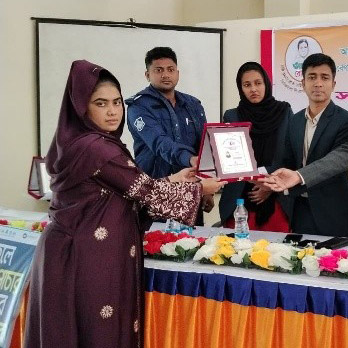
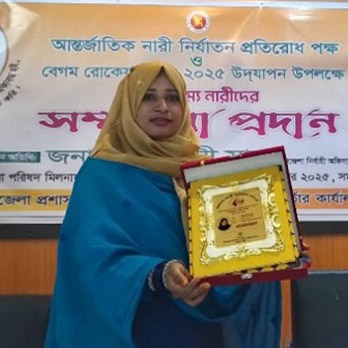
“Having survived ordeals that most people cannot even begin to imagine, I have fought to rediscover my strength and reclaim my life,” said Mabeya Khatun, a trafficking survivor and small business owner. “In the process, I also became a voice that anyone facing exploitation and harm can trust,” adds Mabeya, one of four survivors working with the Ashshash II project who were honored with prestigious “Indomitable Women of the Year” awards from the government of Bangladesh at both the district and national levels in 2025.
“I can also effectively assess the kind of help a person in harm’s way is in need of, from first-hand experience,” Mabeya said. “Most importantly, my lived experiences help me lead them away from such situations with a sense of credibility that only a survivor can offer.”
Mabeya’s belief — that dignity, agency and economic security are essential to prevention — guides Ashshash II’s work. The project builds on lessons from Ashshash’s first phase, also led by Winrock, expanding local partnerships and strengthening the capacity of both government and private-sector service providers to deliver trauma‑informed, accountable and more personalized support. It forges strategic partnerships with government and private‑sector partners to ensure survivors can access services and opportunities long after project support ends.
“Ashshash II is designed not just to help people recover, but to help shift the systems that made exploitation possible in the first place,” said Dipta Rakshit, project director for Ashshash II. “When survivors build stable livelihoods, claim their voices and lead within their communities, prevention becomes sustainable.”
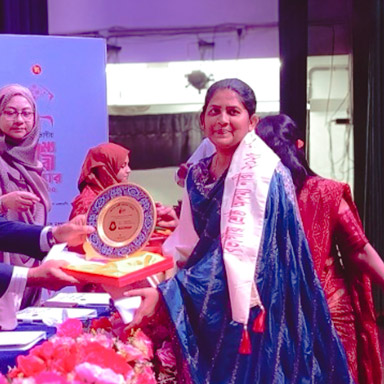
That transformation is visible in the lives of four women recently recognized for their courage, leadership and service.
From recovery to leadership
In Khulna, a coastal city in southwestern Bangladesh near the Sundarbans mangrove forest, Mabeya now runs a beauty parlor and sells handmade clothing. With support from Ashshash II, she diversified her income, trained other vulnerable women in sewing, tutored village children and began teaching at a local school. She also helped her husband bolster his own livelihood by purchasing a motorized rickshaw.
Her leadership extends well beyond her household. Mabeya organizes awareness campaigns, advocates with service providers, intervenes to prevent child marriages and helps identify trafficking survivors and connect them to critical services, with support from Ashshash II.
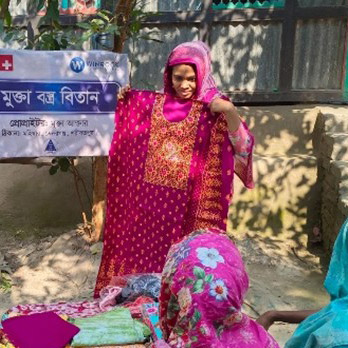
In Shariatpur, a river‑dominated, rural district in central Bangladesh where many livelihoods depend on agriculture and migration, Mukta Akter has rebuilt her family’s stability through entrepreneurship. Now the sole provider for her household, she runs a clothing business and raises livestock, supporting her children’s education in a context where economic pressure and climate stress heighten vulnerability to trafficking.
Mukta also mentors other women, enrolling them in skills training and sharing guidance on safe migration.
“Our shared womanhood creates a sanctuary of trust,” she said. “This mutual understanding allows other women to heed my advice and weigh life-changing decisions in an honest and practical manner. As a woman who stood alone in her moment of despair, this rapport is the single most powerful tool in peer-to-peer guidance – helping women navigate toward safe life-choices.”
In Jashore, a regional trade and agricultural hub in southwestern Bangladesh, Sharifa Yasmin has turned recovery into public leadership. After returning to Bangladesh in 2019 following severe exploitation abroad, she faced stigma and isolation. Through Ashshash II and local partners, Sharifa received survivor‑centered psychosocial support and livelihood training that allowed her to rebuild on her own terms.
Today, she runs a small business that supports her family and independence. She also facilitates community dialogues and school‑based campaigns on trafficking risks, child marriage and safe migration. So far, she has counselled more than 40 victims of child marriages while identifying nine other survivors in her community and helping them gain access to the same essential, life-saving services that fuelled her own transformation. Her goal is to help others access services and to intervene before harm occurs.
Her leadership has earned national and district-level recognition, including the Shrestha Joyee (Exemplary Winner) Award from Bangladesh’s Ministry of Women and Children Affairs, and her designation as an Indomitable Woman of the Year.
“Your past is a chapter,” Sharifa said. “But you are the author of the rest of the book.”
A fourth survivor-honoree, Promi Akter Liza, focuses on prevention in increasingly digital spaces. A grassroots activist supported by Ashshash, she mobilizes youth, uses social media to raise awareness about trafficking and cyber scams, advocates against violence, and promotes safe migration practices. She also works closely with survivor networks to ensure women who escape exploitation are protected, supported and heard.
“By kickstarting a grassroots organization working to empower the youth, I am helping institutionalize awareness efforts that address what I believe is the single biggest threat to young people, today – unregulated spaces on social media platforms,” Promi said. “Limited education and information on cybersafety and safe browsing leave countless boys and girls vulnerable to online scammers and criminal networks, including traffickers. To protect them, our communities — from their guardians to religious thought-leaders and government officials — must advocate for increased awareness and education on cybersafety, from middle schools to universities.”
Resilience that multiplies
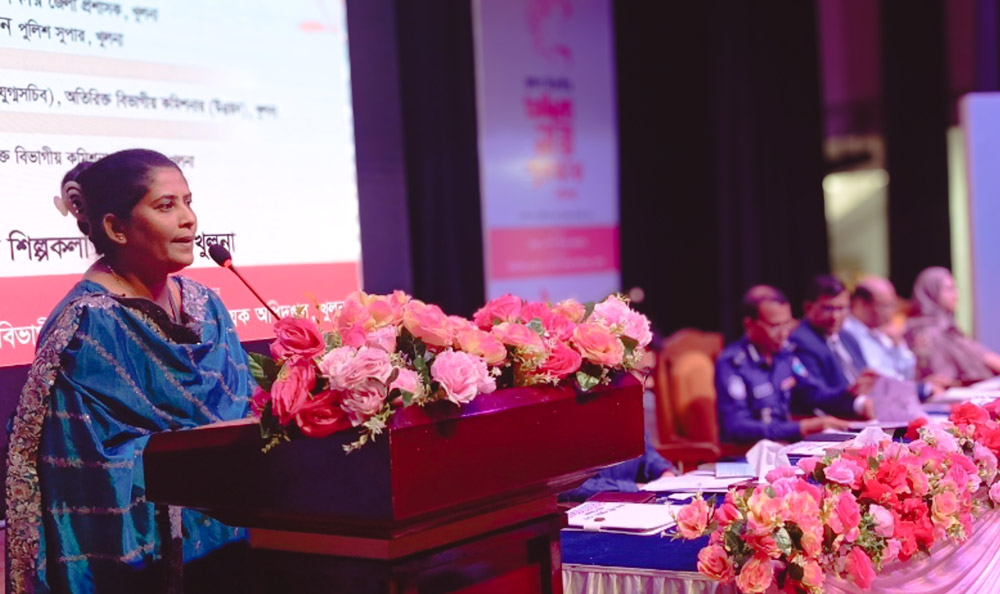
Together, these women embody a core principle of Winrock’s Resilience Stories series: Resilience is not simply about recovery; it is about agency, dignity and leadership that multiplies impact.
Ashshash II builds on Winrock’s longstanding human rights work in Bangladesh, including efforts to prevent hazardous child labor, address child marriage and reduce vulnerability to trafficking through integrated prevention, protection, prosecution and partnership strategies. This includes previous human rights initiatives that examined how climate stress, livelihood loss and migration can increase trafficking risks — and how resilience-building approaches can reduce those vulnerabilities.
“These women represent the core of strong, effective countertrafficking work — survivor-centered, community-led and grounded in dignity,” said Stephanie Lillegard, portfolio director of Winrock’s Human Rights group. “Their leadership reflects our commitment to protecting human rights while addressing the root causes of exploitation.”
The Ashshash II project also reflects Winrock’s 2026–28 strategic plan, which prioritizes resilience‑building approaches that help communities withstand shocks, adapt to change and reduce vulnerability over time. Rather than treating trafficking solely as a criminal justice issue, Ashshash II recognizes it as a resilience challenge shaped by livelihoods, mobility, social norms and access to opportunity.
By investing in survivors as leaders, Ashshash II is helping to shift those conditions from within.
As Bangladesh and other countries navigate economic uncertainty and cope with climate‑driven migration and other risks, the leadership and determination of survivors like Mabeya, Mukta, Sharifa and Promi offers a powerful reminder: resilience is strongest when it is community-led.
Related Projects