
The Director’s Take: Lucy Jodlowska on connecting Winrock’s work on entrepreneurship, regenerative ag and rural opportunity in the U.S.
How is Winrock’s 2026-2028 strategic plan changing the way we work? In “The Director’s Take,” we ask leaders across the organization to share their thoughts on what’s shifting, how we’re working, and what comes next. Lucy Jodlowska, senior director of Winrock’s U.S. Programs portfolio, continues the series with insights on Winrock’s expanding work with entrepreneurs, farmers and rural communities in the U.S.
How is entrepreneurship central to achieving resilience and prosperity in rural communities, and what have you learned from leading work for Winrock’s U.S. Programs and Wallace Center at Winrock International?
Entrepreneurship is the mechanism by which everything else we do becomes durable. At Winrock we describe it as a core pathway to resilient livelihoods, competitive markets and locally led economic growth — and that’s not a tagline, it’s an operating theory. Technical expertise alone doesn’t change a community. It changes a community when it’s translated into businesses, jobs, and market relationships that keep working long after a grant ends.
The data backs this up. Small businesses employ more than half of the workers in rural U.S. counties, and while recent national research shows that the overwhelming majority of rural entrepreneurs want to grow, nearly half report being denied credit at some point. That gap between ambition and access is exactly where our U.S. Programs portfolio lives. The Arkansas Women’s Business Center — managed by Winrock for more than 15 years — walks founders from idea to pilot and client validation, and we see over and over that when a woman launches a business in a small town, she doesn’t just create her own livelihood — she hires locally, buys locally and becomes part of the civic fabric. Our rural business development work in the Mississippi Delta pairs one-on-one coaching and procurement readiness with digital and AI-enabled skills, because today a Main Street business in Sunflower County (Mississippi) competes in the same digital economy as one anywhere else. And Winrock’s Science Venture Studio project shows the other end of the spectrum: helping researchers and innovators turn science into investable ventures, so that innovation-driven startups aren’t only a coastal phenomenon. (For more on Winrock’s work on entrepreneurship, see this announcement about Katie Milligan-Dixon joining the U.S. Programs team: https://winrock.org/katie-milligan-dixon-joins-winrock-international-as-director-of-u-s-entrepreneurship/).
What ties food systems, regenerative agriculture and entrepreneurial startup support together is a single thread: market opportunity owned by local people. The Wallace Center at Winrock International’s value chain coordination work is, at its heart, entrepreneurship support for farmers and the small businesses between farm and buyer. Our partnerships with institutions like Riceland, a farmer-owned cooperative working with us in the U.S. heartland to expand incentives for conservation-minded rice growers, reflect the same logic. It’s about anchoring opportunity in enterprises that communities actually own.
The biggest lesson from leading this portfolio: resilience isn’t something you deliver to a community. Communities build it themselves when they have trusted local institutions, honest technical assistance and a fair shot at capital. Our job is to make sure those three things show up together.
Winrock recently recruited a new director of U.S. Agriculture and the Wallace Center. What opportunities does that create for the future of Winrock’s work with regenerative farming, food systems and rural communities?
This important hire comes at a moment of genuine momentum, which makes it an unusually exciting leadership opportunity. The Wallace Center has spent the past few years building the evidence base and the field infrastructure for regenerative transitions in the Midwest — publishing a regional value chain coordination strategy, standing up a working group of partners across six states, refreshing our training curriculum, and making a multi-year organizational commitment to train a new generation of value chain coordination practitioners. The strategy is written. The next chapter is execution at scale, and that’s what new leadership gets to drive, among other major initiatives. I’m excited for everyone to get to know our new director for U.S. Agriculture, Mary Fales, in the months ahead. She comes to us from The Nature Conservancy and has 20 years of experience in the Upper Midwest.
The biggest opportunity I see is tighter alignment between three things that too often operate separately: science-based solutions, market innovation and place-based implementation. We know far more than we did a decade ago about what regenerative practices do for soil, water, and farm resilience. We also know that practice change doesn’t stick unless the market rewards it — which is why so much of our work now focuses on the middle of the supply chain, where aggregation, processing and coordination determine whether a regenerative farmer can actually reach a buyer. A director who can connect the research community, the companies making regenerative sourcing commitments, and the farmers and food businesses doing the work on the ground can move all three forward, together.
It’s also a chance to knit U.S. agriculture more closely to the rest of our portfolio. Farmers are entrepreneurs — full stop. The same capital access barriers, succession questions, and market development needs we see in our entrepreneurship work show up on farms, especially for the mid-scale operations that anchor rural economies. I want our agriculture and entrepreneurship teams finishing each other’s sentences, and this role is central to making that happen.
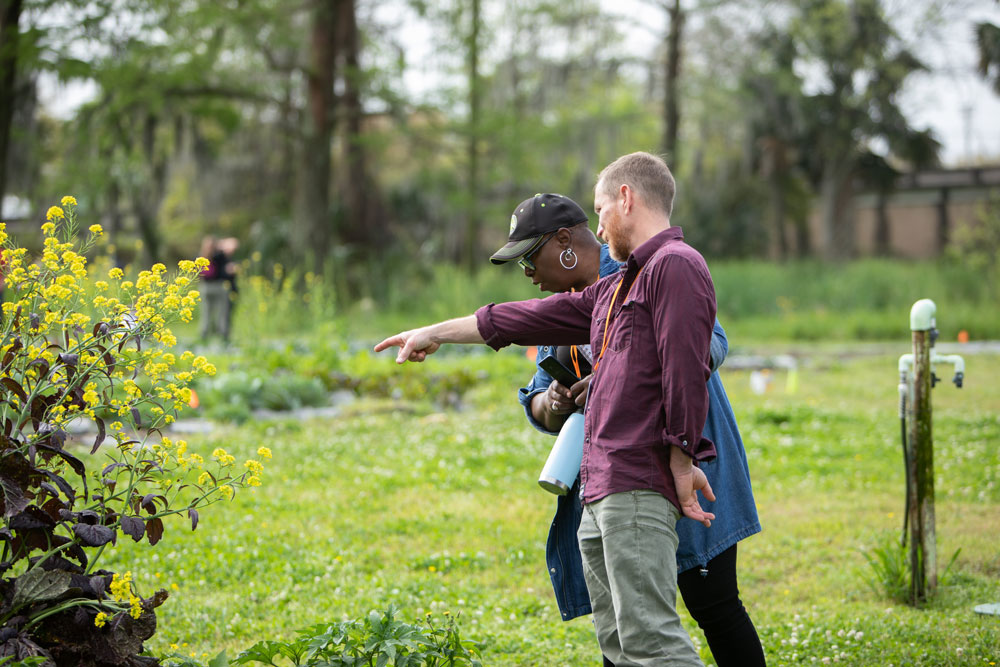
Looking ahead five years, what does success look like for Winrock’s U.S. Programs portfolio, and what gives you optimism about the future of rural America?
Success, five years out, shows up on balance sheets that aren’t ours. It looks like farms in the Midwest and the Delta that are more profitable because regenerative practices and better market access raised their margins, not just their yields. It looks like a trained network of value chain coordination practitioners embedded in regional food economies, so the capacity we’ve built keeps compounding without us in the middle of every transaction. It looks like hundreds of small businesses across Arkansas and Mississippi that got coaching, capital readiness and digital skills from us and then outgrew the need for us. And it looks like new forms of capital: blended, patient, farmer-friendly and actually flowing to the mid-scale farms and food businesses that conventional finance has underserved, with Winrock recognized as the technical assistance partner and convener that helped design the plumbing. I’m also excited about emerging work we’re developing on the innovative funding side… more on this in 2027!
Internally for Winrock, success means the portfolio operates as one system. Agriculture, entrepreneurship and community development aren’t separate programs that happen to share a logo — community development is how our agriculture and entrepreneurship work takes root in a place. In five years, I want every project we run to be legible as part of that single story.
As for optimism: we spend a lot of time in communities that many outsiders have written off, and what we see on the ground doesn’t match the narrative of decline. We see and meet entrepreneurs and change makers every day, and most of them are planning to grow. I see a generation of younger and more diverse farmers who treat soil health and business strategy as the same conversation. I also see a growing consumer consciousness and demand for local, regeneratively produced food that simply didn’t exist at this scale 10 years ago, and technology that lets a Delta business reach customers anywhere.
Most of all, I see local leaders who aren’t waiting for permission to shape their communities’ futures. Our job is to back them and come alongside to help build the support ecosystems and access to resources that they need to succeed.
Related Projects
Wallace Center
The Wallace Center at Winrock International is a nonprofit organization with a mission to bring together diverse people and ideas to co-create solutions that build healthy farms, equitable economies, and resilient food systems. Our vision is that all communities have the power to nourish themselves and regenerate ecosystems through just food and agriculture systems. At […]
Arkansas Women’s Business Center
AWBC is committed to providing technical assistance, training, and access to capital services tailored to meet the needs of women business owners. The Center is funded in part through a Cooperative Agreement with the U.S. Small Business Administration. It is in a network of over 100 Centers located through the nation. Winrock’s staff and team of […]
Advancing Markets for Producers (AMP)
The Advancing Markets for Producers project, funded by the U.S. Department of Agriculture and implemented by Winrock International, is a U.S.-based initiative that seeks to strengthen the competitiveness and profitability of American rice farmers by piloting a premium program and delivering small farmer grants geared towards conservation farm management. Implemented in partnership with Riceland Foods, a farmer-owned cooperative based in Stuttgart, Arkansas, AMP delivers practical, market-driven solutions that […]